Miles College President Represents HBCU Excellence at Milken Institute Global Conference
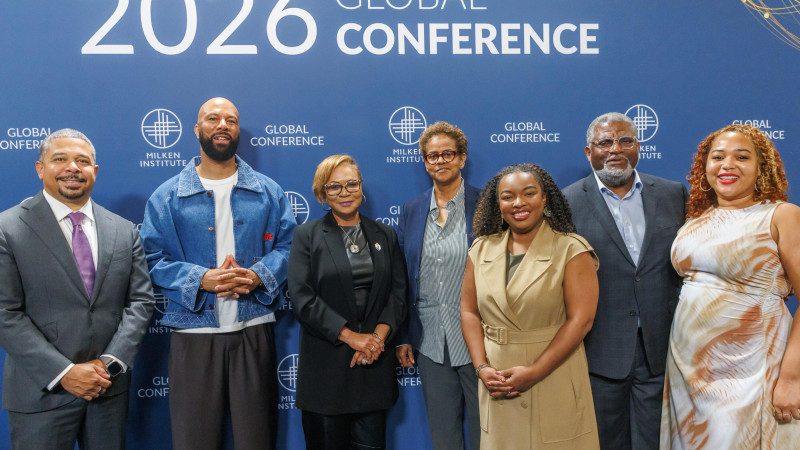
Miles College President Bobbie Knight represented Miles and HBCUs at the Milken Institute Global Conference, an annual convening that brings together leaders across health, finance, business, technology, philanthropy and public policy. The 2026 conference, held May 3-6, 2026, focused on translating recent disruption and innovation into practical solutions for a more sustainable, equitable and resilient future.
President Knight spoke on the featured panel discussion, “Investing in the Resiliency of HBCUs,” moderated by the host of NPR’s Weekend Edition Sunday and Up First Ayesha Rascoe and opened by Academy Award-, Emmy- and Grammy-winning artist and activist Common, who has deep ties to the HBCU community.
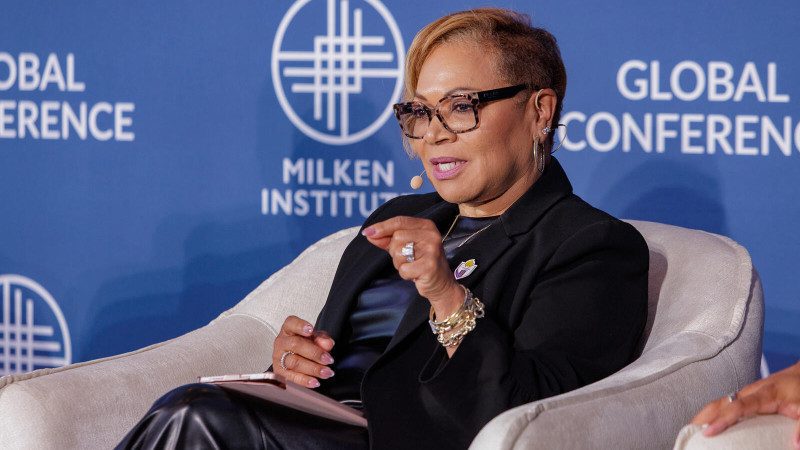
Miles College President Bobbie Knight spoke on a panel discussion on “Investing in the Resiliency of HBCUs” at the Milken Institute Global Conference. She was the only sitting HBCU president on the national panel. Photo from Miles College.
The discussion centered on the economic impact of HBCUs and the urgent need for sustained investment in institutions that continue to drive educational attainment and economic mobility.
President Knight was the only sitting HBCU president on the national panel. She was joined by a distinguished lineup of national leaders, including: Melissa Bradley, CEO of New Majority Ventures and General Partner at the 1863 Venture Fund; William J. Bynum, founding CEO of HOPE (HOPE Enterprise Corporation, HOPE Credit Union and HOPE Policy Institute); and Todd McDonald, president of Liberty Bank and Trust Co.
“It was an honor to represent Miles College and the broader HBCU community on a global stage alongside leaders who understand the transformational impact of these institutions,” said President Knight. “HBCUs continue to be engines of opportunity, innovation, workforce development and economic advancement for communities across this nation. My students are not going to be left behind. Miles is investing in AI fluency, in workforce alignment, in revenue-generating partnerships, because resilience is not a concept for us. It’s a strategy.”
“My students are not going to be left behind … Resilience is not a concept for us. It’s a strategy.”
The economic case for HBCU investment is clear. HBCUs generate $16.5 billion in annual economic impact, support 136,000 jobs and produce $146 billion in projected lifetime earnings for graduates. The average HBCU graduate earns more than $1 million in additional lifetime income.
Miles College reflects that impact at the local level: the institution is largest employer in Fairfield, AL, supporting 641 jobs and generating $69.3 million in annual regional economic impact, anchoring a city that has navigated six years of bankruptcy. Miles College graduates are projected to earn more than $1.2 million in additional lifetime income compared to non-graduates.
During the panel discussion, President Knight highlighted Miles College’s participation in a UNCF matching investment program designed to build long-term endowment capacity across its 37 member-institutions. Miles College has committed to contributing $5 million in unrestricted funds to the program, which UNCF will match dollar-for-dollar, with matched funds generating annual interest payments back to the institution.
Does your member institution have news? Share it with UNCF.