College Student Advocacy: Make Your Voice Heard in Washington, D.C.
Key Takeaways
- Student voices can influence federal education policy.
- Focus each call, email or letter on one clear request.
- Personal stories strengthen facts about HBCU funding and student aid.
- Consistent outreach helps build lasting relationships with lawmakers.
Make Your Voice Heard
Many college students already debate public policy in group chats, campus forums and comment sections. Direct some of that energy toward Washington, D.C., where lawmakers make decisions about financial aid, campus safety and college funding, often without student voices in the room.
You don’t need a political science degree or a trip to Capitol Hill to advocate effectively. A clear message and personal experience can make an impact. For HBCU students, advocacy also continues a proud tradition of challenging injustice, strengthening communities and helping shape a better future.
Why Your Voice Matters on Capitol Hill

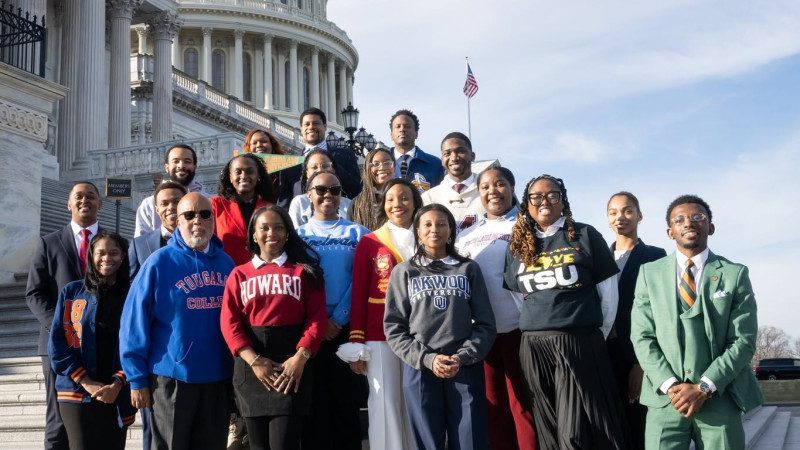
HBCU on the Hill Day 2025. Photo from Congressman Bennie G. Thompson‘s Facebook page.
Congressional offices log every phone call, email and letter that comes in, and staffers use those tallies to gauge how constituents feel about pending bills. A Government Facts guide to contacting Congress notes that a sudden spike in calls on one issue signals real urgency to an office, and that phone calls remain one of the most effective ways to get a staffer’s attention because someone has to stop and actually listen.
That matters even more for HBCU students. UNCF and its member college presidents serve as the primary voice for HBCUs before Congress and federal agencies on education policy and student aid, according to UNCF’s 2025 fact sheet. Your call or letter adds a personal, current voice to that ongoing advocacy effort.
Know the Stakes for HBCU Students
 Numbers and your personal story help ground your advocacy in something concrete. HBCUs produce a disproportionate number of Black professionals—especially in STEM—and generate billions in economic impact to their surrounding communities, yet still face chronic underfunding.
Use these quick stats. to help make your case:
- HBCUs make up only 3% of four-year nonprofit colleges and universities nationwide, yet they enroll 10% of all Black students and confer roughly 19% of STEM bachelor’s degrees earned by Black graduates.
- HBCUs generate about $16.5 billion in annual economic impact and support roughly 136,000 jobs nationwide.
- HBCU endowments are significantly smaller than non-HBCUs. All HBCU endowments combined total around $4 billion, far less than ivy-league institutions—like Harvard’s endowment, which stands at $68 billion.
- HBCUs face chronic, systemic underfunding from federal and state governments. Public HBCUs face an average of more than $60 million in deferred maintenance costs per campus due to aging and deteriorating infrastructure.
- When you talk to a congressional staffer about Pell Grants, Title III funding or HBCU capacity-building grants, these figures show why the ask matters far beyond your own campus.
Find and Identify Your Representatives
Skip the guesswork. Go to Congress.gov’s Member Lookup tool and enter your address to pull up your senators and House representatives. Save their D.C. office numbers in your phone now, before you need them.
You can also reach any office through the Capitol switchboard at 202-224-3121, which will connect you directly to a senator’s or representative’s staff, per the League of Conservation Voters’ calling guide. Every office has both a D.C. location and a district office back home, and district offices often respond faster since they’re built to handle direct constituent concerns.
Make Your Call Count

Photo by Shawn Fields on Unsplash.
Phone anxiety is real, but a congressional call follows a simple script. Identify yourself as a constituent, name your college or university, state the specific issue or bill and make one clear ask. According to a practical guide from watch.vote, leading with your district identity and one concrete policy reference helps staff route and log your message faster than a long, unfocused story does.
A few pointers to make calls more effective:
- Name a specific bill or program: Rather than describing a general worry, name the bill or issue you’re calling about. “I’m calling about the FY2027 Title III HBCU funding line” lands better than “I care about education.”
- State one clear ask: Request a “yes” or “no” vote, a co-sponsorship or a public statement.
- Keep it short: Staffers field dozens of calls a day, so 60 to 90 seconds is plenty.
- Leave your name and address: This way, the call counts toward your specific district’s tally.
Write Letters and Emails That Get Read
Handwritten and typed letters still carry weight, particularly when they stay under one page and focus on a single issue, according to the ACLU’s guide to writing to your elected officials. Open with your purpose, cite the bill number and include a brief personal example, such as how a Pell Grant or HBCU capacity grant affects your own tuition bill.
Visit in Person in Washington, D.C. or at Home

The 2017 Annual White House Summit on HBCUs. Photo from the White House archives.
Nothing replaces a face-to-face meeting, whether it happens on a Capitol Hill visit or at a district town hall over summer break. Many HBCUs and organizations, including UNCF, coordinate student advocacy days in Washington, D.C., pairing students with congressional meetings on issues such as Pell Grant expansion and HBCU infrastructure funding. Check with your school’s government relations office or UNCF directly to find out about upcoming advocacy you can get invovled in.
Show Up Consistently, Not Just During a Crisis
Advocacy works best as a habit, not a one-time event. Calling regularly, even without a single dramatic vote on the horizon, keeps your representative’s office aware of what matters to their constituents. Set a recurring reminder to check on a bill’s status, follow your representative’s committee assignments and reach out again when something shifts.
Your campus faces real, specific stakes in federal budget decisions and every congressional office wants to hear directly from the students those decisions affect. Grab your representative’s number, write down your one clear ask and make the call today.