Small Colleges vs Large Universities: Which Is Better for Your Learning Style?
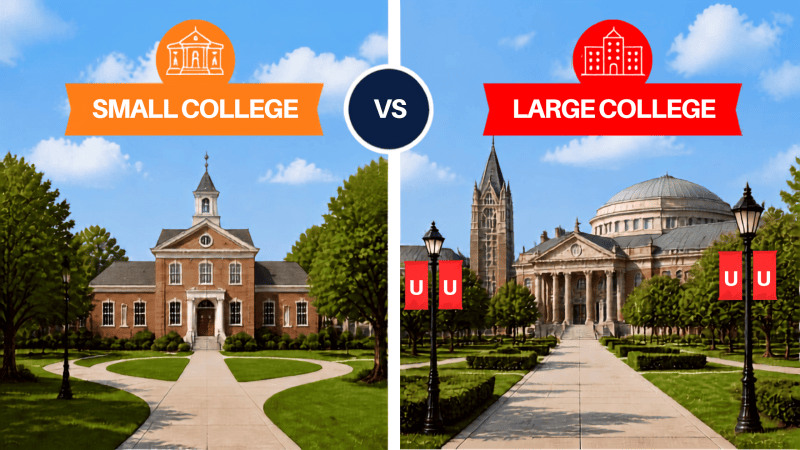
Key Takeaways
- Small colleges often provide closer faculty relationships and personalized support.
- Large universities typically offer more majors, facilities and campus activities.
- HBCUs range from small colleges to large universities and often foster strong community connections.
- Your ideal college depends on your learning preferences, goals and comfort level.
- Compare class sizes, academic resources, campus culture and financial aid before deciding.
Choosing a college involves more than comparing majors, tuition cost and location. You also need to consider how you learn best. Do you thrive when professors know your name and expect you to participate? Or do you feel energized by a bustling campus with extensive course options, research facilities and student organizations?
Both small colleges and large universities offer an excellent education. Whether you’re preparing for high school graduation or considering a college transfer, aligning your university choice with your natural learning habits lays the foundation for future success. Understanding how class size, access to faculty and campus culture affect your education helps you make an informed decision.
Benefits of Small Colleges
 Small colleges often create close-knit learning communities. You may take several courses with the same classmates, work directly with professors and receive more individualized feedback. Those connections can make it easier to ask questions, request help or find a faculty mentor.
A smaller setting may be best if you:
- Prefer discussion-based classes.
- Want professors to notice your participation.
- Feel comfortable in a familiar community.
- Value personalized academic advising.
- Hope to build close relationships with classmates.
Smaller campuses can also make clubs, leadership positions and other activities feel more approachable. You may spend less time navigating a large system and more time forming meaningful connections.
However, a small college may offer fewer majors, specialized courses or research opportunities. Some students can find the social environment more limited. Before enrolling, confirm that the college offers enough academic depth in your intended field.
Benefits of Large Universities

Butler Library at Columbia University. Photo from Flickr/Billy Wilson.
Large universities usually offer a wider selection of majors, electives and academic resources. You may gain access to advanced laboratories, extensive libraries, major athletic programs and hundreds of student organizations. Large institutions may also provide multiple sections of popular courses, which can give you greater scheduling flexibility.
A large university may be the right fit if you:
- Enjoy meeting new people.
- Want many academic and extracurricular choices.
- Feel comfortable advocating for yourself.
- Prefer greater independence.
- Want access to large research programs or specialized facilities.
Introductory courses at large universities may enroll hundreds of students. Professors may rely on teaching assistants (TAs) for discussion sections, labs or office hours. Students who speak up, attend office hours and use tutoring services can still build strong academic relationships, but those connections may require more initiative.
Large campuses can also feel exciting one day and overwhelming the next. Consider how you respond to crowds, longer walks and complex administrative systems.
Where HBCUs Fit In
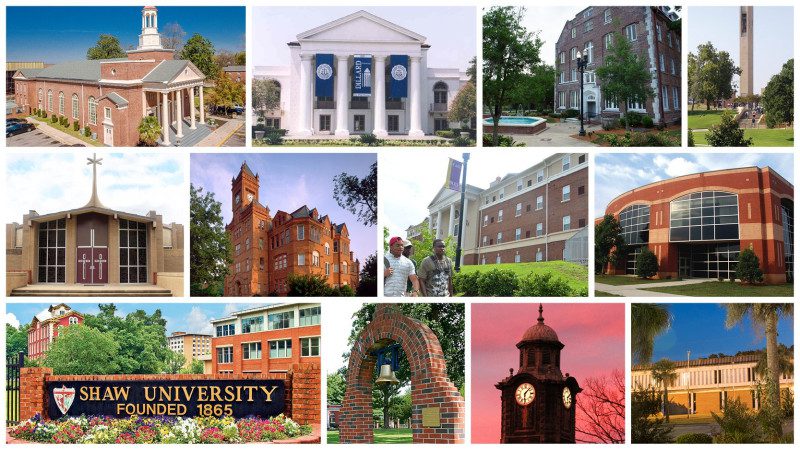 Historically Black colleges and universities (HBCUs) don’t fall into a single size category. The HBCU community includes small private colleges and larger public universities, so students should examine each institution individually.
Many HBCUs combine rigorous academics with a strong sense of identity, belonging and shared purpose. UNCF explains that HBCUs often foster supportive faculty relationships, active classroom participation and culturally affirming campus communities. Those qualities may appeal to students who want professors and peers to recognize their experiences as part of the learning process.
HBCUs also produce results far beyond their share of national enrollment. According to recent UNCF data, HBCUs serve about 3% of U.S. college students but produce nearly 16% of Black graduates and 18% of Black graduates in STEM fields.
UNCF supports students at many types of institutions. In 2026, the organization reported awarding more than 13,000 scholarships to over 10,000 students at more than 600 colleges and universities, including its 37 member HBCUs. Current and prospective students can explore UNCF scholarships while comparing college options.
Find Your Best College Learning Environment
No single campus model fits every student. A large university offers unmatched choices and specialized infrastructure, whereas a small college provides the supportive mentorship that helps students excel. Evaluate your personal learning style, visit campuses in person or virtually and choose the environment that feels like the best fit. You can choose to transfer later, but it helps to make a full assessment before investing in the wrong school.
Sit in on a class, get a feel for the campus culture by talking with current students and ask professors how they support undergraduates. Compare financial aid packages alongside academic and social factors. The right college won’t simply look impressive—it will give you the environment, resources and relationships you need to succeed beyond graduation.
Does your member institution have news? Share it with UNCF.