HBCU Entrepreneurs Who Changed American Business
Key Takeaways
- HBCUs provide student founders with mentorship, networks and hands-on opportunities.
- HBCU entrepreneurs have transformed media, workforce services and business publishing.
- Campus incubators and pitch competitions help students launch viable ventures.
- UNCF connects aspiring founders with training, funding and professional support.
- Supporting HBCUs strengthens innovation, job creation and economic opportunity.
Ask student founders who graduated from historically Black colleges and universities (HBCUs) where their businesses began, and you will often hear similar answers: a dorm room, a dining hall table or a late-night group chat. HBCUs have spent generations helping students turn classroom ideas into working companies. Their graduates have launched influential media companies, global workforce enterprises and community-centered ventures that transform personal vision into economic opportunity.
Why HBCUs Produce So Many Founders
HBCUs generate $16.5 billion in economic impact and support 136,048 jobs, according to UNCF’s 2024 economic impact report. Each HBCU graduate produces more than $1 million in lifetime economic value.
Inspiration alone, however, can’t build a lasting business. Founders also need knowledge, mentors, professional connections and confidence. HBCUs cultivate all of this through supportive campus communities and a growing network of innovation centers, national partners and pitch competitions. Alongside organizations such as UNCF, HBCUs help aspiring entrepreneurs develop their promising concepts into viable companies, sometimes before graduation.
HBCU Entrepreneurs Who Changed American Business
Three entrepreneurs who transformed their industries while creating opportunities and inspiration for those who followed.
Janice Bryant Howroyd Built a Global Workforce Company
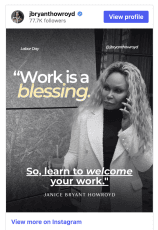
Janice Bryant Howroyd became the first African American woman to build and operate a billion-dollar company.
Janice Bryant Howroyd, a graduate of North Carolina Agricultural and Technical State University (the largest HBCU in the country), founded ActOne Group in 1978 from a small Beverly Hills, CA office. She grew it into a global workforce solutions company and became the first African American woman to build and operate a billion-dollar company. Her continued involvement with North Carolina A&T State University also helps inspire new generations of entrepreneurs.
Cathy Hughes Changed Black Media
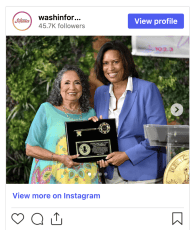
Media pioneer Cathy Hughes was presented the Key to the District of Columbia by Mayor Muriel Bowser, recognizing her decades of leadership, entrepreneurship and commitment to amplifying Black voices.
Cathy Hughes developed her programming and audience expertise while working at WHUR, Howard University’s radio station. In 1980, she founded Radio One, now Urban One, to serve Black audiences that mainstream media often overlooked, becoming the first woman to own a top radio station. In 2016, Howard University renamed its School of Communications after Hughes, recognizing her pioneering media career and deep connection to the university.
Earl Graves, Sr. Created a Platform for Black Business
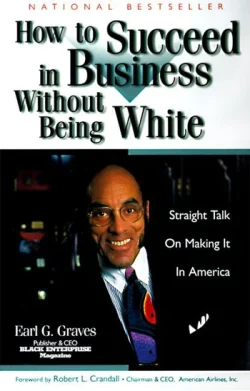 Morgan State University graduate Earl G. Graves, Sr. founded Black Enterprise magazine in 1970. The publication gave Black entrepreneurs, executives and investors greater visibility and practical financial guidance. Morgan State University honors his enduring influence through its Earl G. Graves School of Business and Management.
Today’s HBCU Students Are Building What Comes Next
HBCU entrepreneurship is not only part of history. Colleges now offer incubators, pitch competitions, mentorship and spaces where students can test products and refine business plans.
- Florida Agricultural and Mechanical University’s Center for Innovation and Social Impact connects student and community founders with alumni, academic experts and experienced professionals. The Center’s programs help entrepreneurs develop ideas, prepare pitches and pursue seed funding.
- Benedict College (a UNCF-member institution) repurposed its former bookstore as a pop-up retail space for student entrepreneurs, allowing them to sell products without taking on the expense of a traditional storefront.
- The Center for Black Entrepreneurship at Spelman and Morehouse Colleges (both UNCF-member institutions) was launched with $10 million in anchor funding from Bank of America and developed with the Black Economic Alliance Foundation. The Center offers curriculum, mentorship and investor access. Students at Clark Atlanta University (another UNCF-member institution) and the Morehouse School of Medicine can also tap into the coursework.
- Bowie State University’s Entrepreneurship Innovation Center held a record-setting Bulldog Pitch Competition in 2026 with more than 60 applications, including a track reserved for ventures already earning revenue.
- The HBCU Founders Initiative’s Better Futures Pitch Competition has awarded more than $50,000 since 2023 to founders from across the HBCU network.
HBCU entrepreneur visibility keeps climbing. At New York Tech Week in June 2026, five HBCU founders dominated the first-ever Times Square pitch competition. Bowie State University alumna Carolyn Alston won the grand prize for Communica8 It!, an interactive card game designed to encourage conversation and connection.
How UNCF Helps Ideas Grow
 UNCF built its Center for Innovation and Entrepreneurship around a simple promise: carry students from idea to impact. The center runs innovation labs, symposia and funding competitions aimed squarely at early-stage founders. It also provides students with mentorship opportunities.
The payoff shows up fast. UNCF’s 2024 Innovate for Impact Pitch Competition drew 360 student submissions in a week and a half. The competition narrowed the field to 65 ventures from 27 HBCUs and awarded $32,500 across three winners. Howard University’s Raina Ford claimed the $15,000 grand prize for Project I See U, a multimedia and retail social enterprise that aims to revolutionize how adverse childhood experiences are addressed by providing social emotional resources which help children feel seen, heard and understood.
UNCF TechVentures supports entrepreneurs in technology. The program partnered with the HBCU Founders Initiative to seed campus pre-accelerators where student teams validate a problem and build a working product over eight weeks.
Supporting UNCF and HBCUs helps create campuses where future founders can experiment, learn and build. With the right resources behind them, today’s students can launch companies that generate jobs, solve community problems and open doors for those who follow.
Does your member institution have news? Share it with UNCF.