Dr. Lomax, president and CEO, UNCF, Speaks at Black Wall Street Legacy Festival
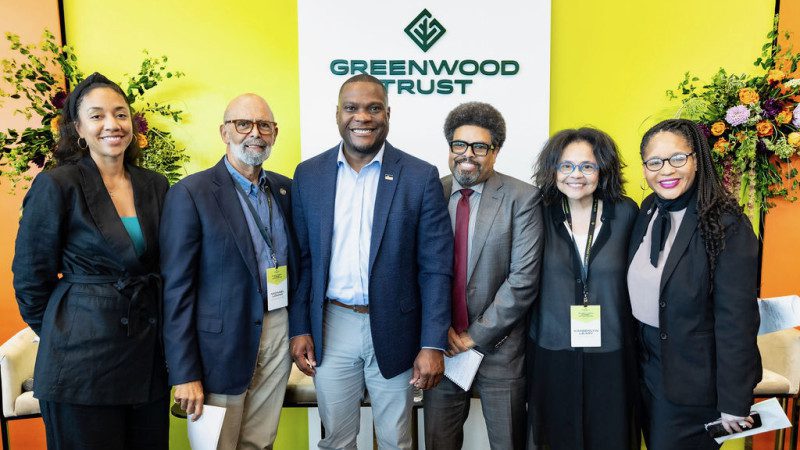
The Black Wall Street Legacy Festival took place last month in Tulsa, OK, honoring the enduring legacy of the city’s Greenwood District, once known as “Black Wall Street.” Dr. Michael L. Lomax, president and CEO, UNCF, was a featured panelist at the festival, discussing the importance of investing in historically Black colleges and universities (HBCUs) to further economic mobility in communities like Greenwood across the nation.
“The legacy of Greenwood reminds us of both the brilliance and resilience of Black communities and the urgent need to invest in systems that create lasting economic mobility,” Dr. Lomax shared. “I look forward to continuing to work together to shape long-term outcomes for communities like Greenwood, North Tulsa and Black communities across the country.”
Black Wall Street Legacy Festival
The Black Wall Street Legacy Festival featured American Idol champion, Broadway star and Grammy Award-winning Fantasia during a Legacy Concert. It also held a walking tour, worship service, karaoke, kickball game and an African Street Festival. The festival featured a soil collection ceremony and candlelight vigil to memorialize and honor the lives of victims of the 1921 Tulsa Race Massacre.
A Black Wall Street Symposium also took place during the festival, which is where Dr. Lomax joined a panel discussion with members of the Greenwood Trust, a new fund that aims to advance economic recovery in the Greenwood District and address disparities stemming from the 1921 massacre. During the discussion, leaders from across the country highlighted bold economic inclusion strategies, uplifted the innovation taking place in Greenwood and North Tulsa and looked ahead to building a more prosperous future. They focused on shaping the future of Black economic mobility, and philanthropy’s role in supporting entrepreneurship, housing, education and cultural preservation.
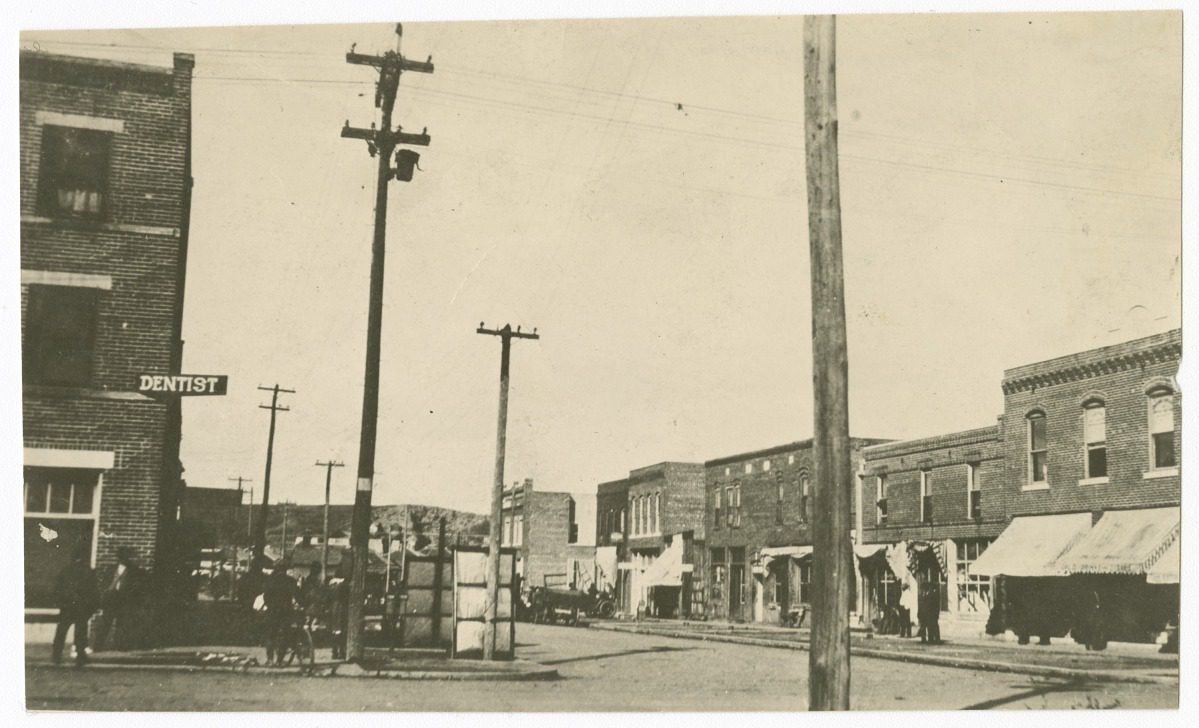
Before it was destroyed in the Tulsa Race Massacre, the Greenwood District was a thriving self-sufficient local economy with hundreds of Black-owned businesses. Photo from the Smithsonian National Museum of African American History and Culture.
The festival also premiered the Build in Tulsa 1921 Awards, which works to catalyze the creation of multi-generational wealth through tech and entrepreneurship. Rooted in the legacy of Black Wall Street, Build in Tulsa is committed to providing opportunities for entrepreneurs who have historically been denied resources and funding.
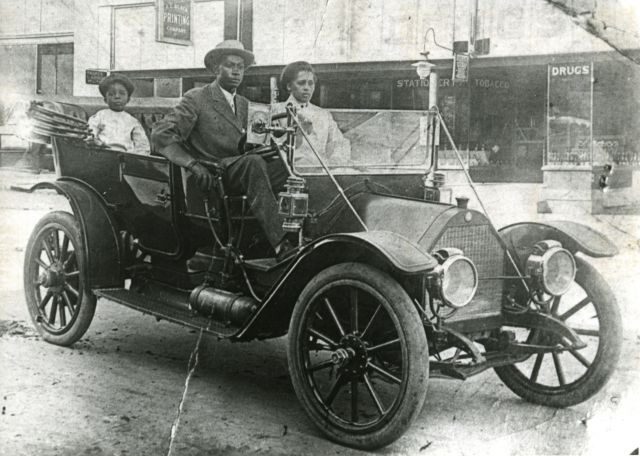
The Williams family were prominent entrepreneurs in the Greenwood District, owning several businesses including the Dreamland Theatre. John Wesley Williams, his wife Loula Williams and their son William Danforth Williams in their 1911 Norwalk automobile. Photo from the Tulsa Historical Society & Museum.
Greenwood, founded in 1906, became a safe, prosperous haven for Black settlers during an era of strict segregation. The insular Black economy was established out of necessity and segregation. By the early 1920s, the area flourished into America’s “Black Wall Street”, with a self-sustaining local economy of 108 Black-owned businesses, including banks, luxury hotels, shops, restaurants, movie theaters, nightclubs, pool halls, doctors’ offices and a library. Greenwood and Black Wall Street was one of the most successful, affluent Black communities in U.S. history—allegedly, every dollar circulated through the community 50 times.
The thriving community was largely destroyed during the Tulsa Race Massacre in May 1921 when a violent White mob burned 40 blocks to the ground, claiming the lives of hundreds of African Americans, leaving thousands homeless and destroying a flourishing business district. The race riots continued into June.
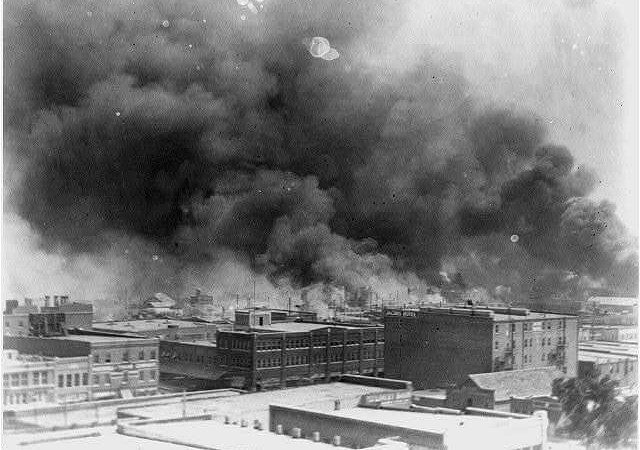
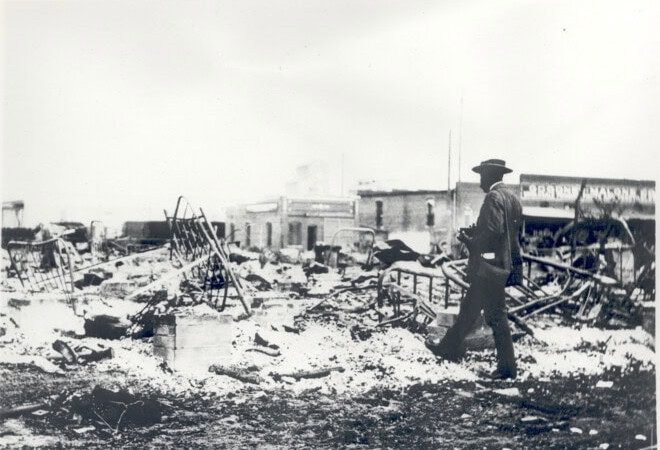
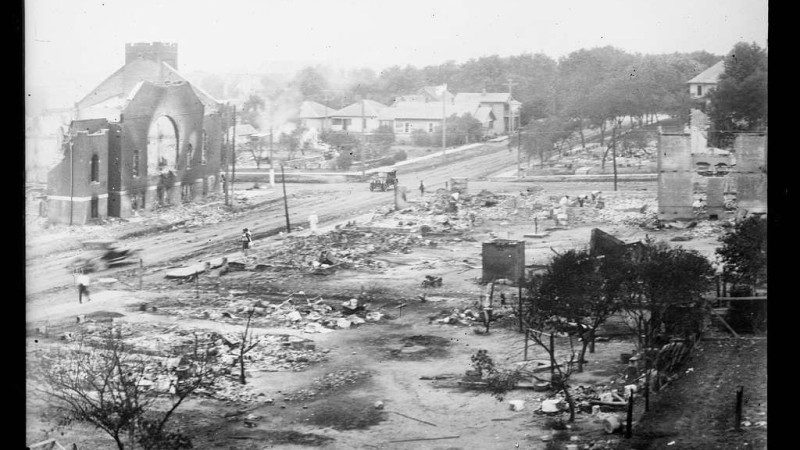
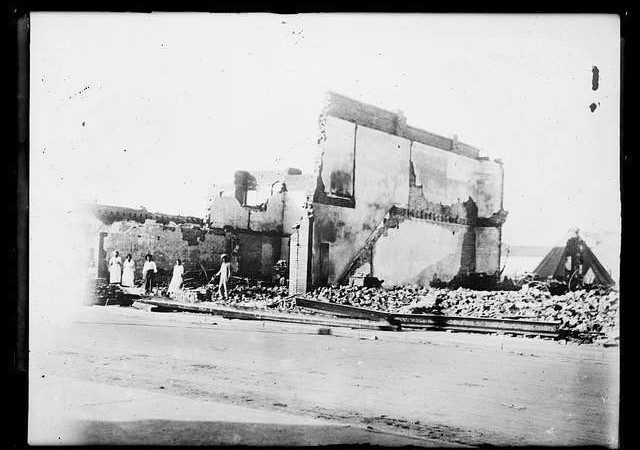
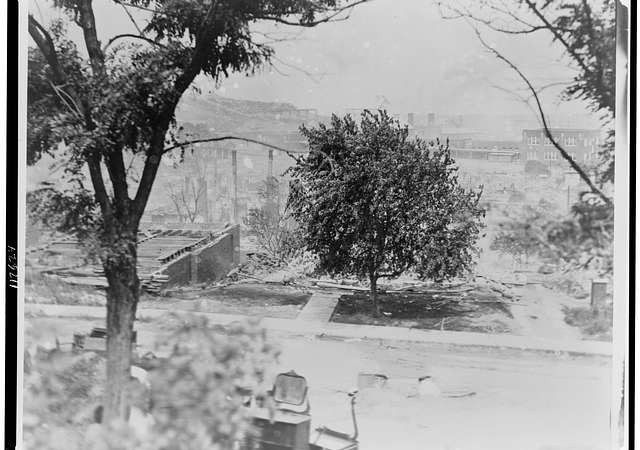
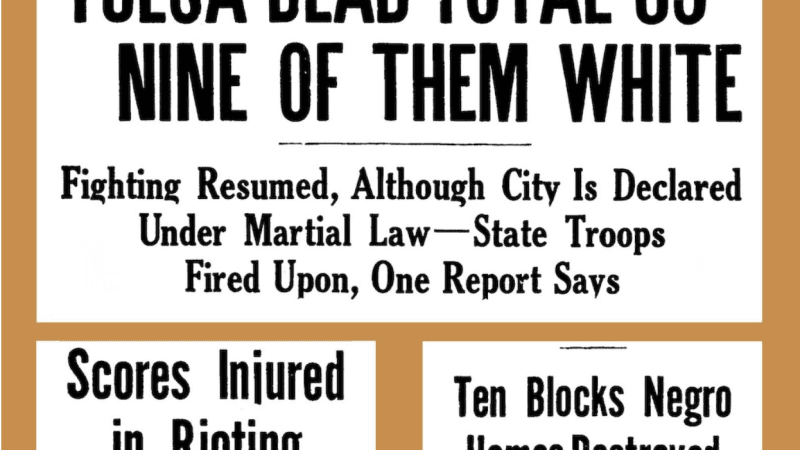
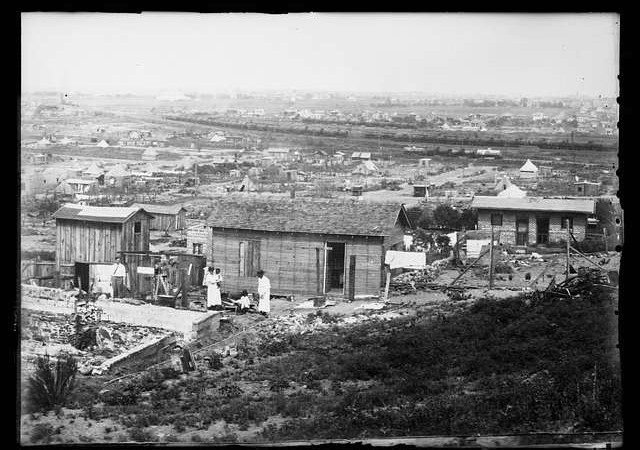
The community rebuilt and prospered once again by the mid-1920s, though decades of highway expansion and urban renewal reshaped the city.
On June 1, 2025, Tulsa Mayor Monroe Nichols set up the Greenwood Trust, with the goal of securing $105 million in assets, with most of the funding secured or committed by June 1, 2026, the 105th anniversary of the Tulsa Race Massacre. This initiative aims to advance economic recovery and address disparities stemming from the 1921 massacre. The Trust plans to support local businesses and entrepreneurs, create affordable housing opportunities, expand educational resources and career pathways and preserve Greenwood’s historic sites and cultural legacy. It should serve as a national model for reparative, community-centered investment that can benefit survivors, descendants and long-term residents of the Historic Greenwood District and North Tulsa.
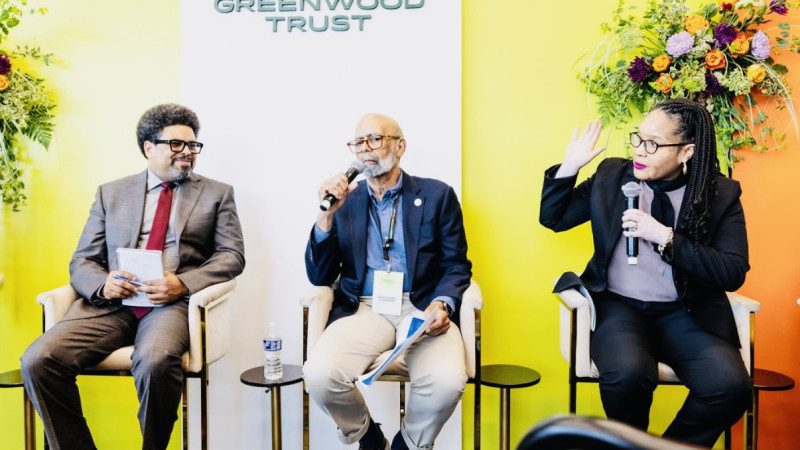
Dr. Michael L. Lomax, president and CEO, UNCF, discussed the legacy of Black Wall Street with members of the Greenwood Trust, which aims to advance economic recovery and address disparities stemming from the 1921 Tulsa Race Massacre.
Learn more about the Greenwood Trust
“Together, we are building a future that honors our past while creating new pathways that foster economic mobility, growth and development in the region with an emphasis on addressing disparities resulting from the Tulsa Race Massacre,” the Greenwood Trust website states.
At UNCF, we know that education is one of the most powerful drivers of economic opportunity and generational change. Ongoing dialogues and sustained investment like this are vital.