Innovations at HBCUs: Spotlighting Groundbreaking Research and Achievements
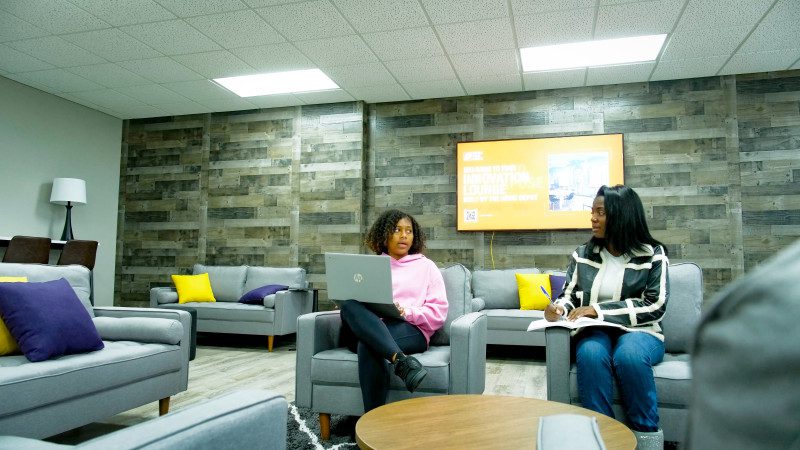
Historically Black colleges and universities (HBCUs) have long been pillars of academic excellence and cultural significance. From fostering influential leaders to advancing social justice, HBCUs have consistently led the way in driving progress.
Today, UNCF-member colleges continue to innovate in research, technology and community impact. Read about groundbreaking achievements and new programs at our member institutions that showcase the transformative power of HBCUs.
Leading Research in Health Disparities
 Several UNCF-member institutions are leading the way in addressing health disparities. Tuskegee University in Tuskegee, AL, is recognized for its work in bioethics and public health, including research to improve health outcomes for underserved populations.
Meanwhile, Morehouse College School of Medicine in Atlanta, GA, continues its commitment to producing culturally-competent physicians and advancing research in areas such as cardiovascular disease and maternal health, both of which disproportionately impact Black communities.
Tech and STEM Innovation

Benedict College in Columbia, SC, has established a cutting-edge Cybersecurity Center that equips students with skills critical to addressing global security challenges.
Similarly, Clark Atlanta University in Atlanta, GA, is leveraging its data science and machine learning expertise to provide students with hands-on experience in these rapidly growing fields, preparing them for high-demand careers in technology and analytics.
Morehouse College recently received an initial $5 million grant from the National Science Foundation (NSF), as part of a larger groundbreaking $457 million project—known as the NSF’s Leadership-Class Computing Facility (LCCF)—to build one of the most powerful academic artificial intelligence (AI) supercomputers in the southeast.
Sustainability and Environmental Justice
 Environmental sustainability is another area in which UNCF-member institutions are making significant contributions. Florida Memorial University in Miami, FL, has launched its Climate Resiliency Center to promote renewable energy solutions and educate students on environmental stewardship, addressing the disproportionate impact that climate change has on Black communities, who face higher risk of displacement from extreme weather events and elevated exposure to industrial pollution.
Dillard University in New Orleans, LA, integrates climate resilience into its curriculum through its Center for Sustainability, empowering students to tackle ecological challenges in urban and coastal areas. By addressing these environmental injustices, these institutions advance research while fostering solutions that benefit the communities most affected by climate change.
Supporting Student Success Through Innovation

Our member HBCUs prioritize student success through innovative programs. Spelman College in Atlanta, GA, has a Center for Innovation & the Arts, which promotes interdisciplinary collaboration and encourages students to explore the intersection of art, technology and entrepreneurship.
Xavier University of Louisiana in New Orleans, LA, offers a renowned pre-med program that combines rigorous academics with mentorship and research opportunities, resulting in one of the nation’s highest medical school acceptance rates.
Embracing Digital Transformation
UNCF-member institutions embrace digital transformation to enhance student experiences and prepare them for the workforce. Livingstone College in Salisbury, NC, recently introduced a state-of-the-art e-sports lab, blending academics with competitive gaming to attract and engage students.
Miles College in Fairfield, AL, is integrating virtual reality into its curriculum, providing students with immersive learning experiences that bridge theory and practice.
The innovations emerging from UNCF-member HBCUs underscore their enduring relevance and vital role in shaping the future. From cutting-edge research to impactful community programs, these institutions continue to break barriers and create opportunities for future leaders. As we celebrate these accomplishments, let us also recognize the importance of investing in these institutions to ensure their legacy of excellence continues to thrive for years to come.
Does your member institution have news? Share it with UNCF.