‘No Longer the Invisible Man’: Columbia University Awards Dr. Michael L. Lomax an Honorary Doctorate
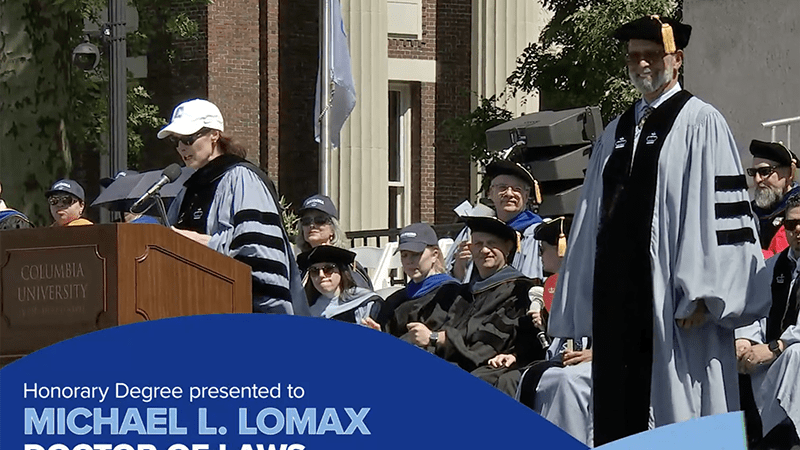
Today, Dr. Michael L. Lomax, president and CEO, UNCF, and indefatigable campaigner for historically Black colleges and universities (HBCUs), is receiving an honorary doctorate from Columbia University in New York, NY—the highest honor the university can bestow on an individual. Dr. Lomax has been recognized “for his life spent fighting for equity in access to educational opportunities.”
Such an illustrious award must be doubly gratifying, as it was at this prestigious Ivy League institution that Dr. Lomax received his master’s degree in English in 1969. Columbia University was a place where, somewhat ironically, he said he felt like “an invisible man.” Yet, as anyone who has encountered Dr. Lomax knows only too well—especially if they have read Ralph Ellison’s classic novel Invisible Man—there is nothing invisible about him. Tall, urbane and with a distinguished countenance, he is the antithesis of inconspicuous, charismatically commanding any room he walks into.
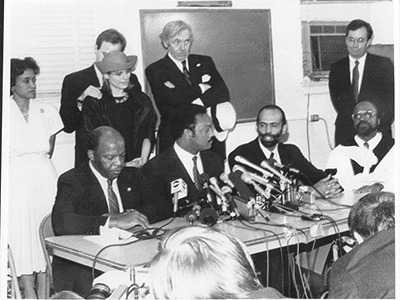
Dr. Lomax with Rev. Jesse Jackson.
Dr. Lomax arrived at Columbia in the summer of 1968 as “a twenty-year-old college graduate from a tiny, unknown HBCU in Atlanta,” he said. His time as an undergraduate at Morehouse College, a UNCF-member institution, had been revelatory and left a gargantuan impression on him. As he fondly recalls, “My college experience had been transformative.”
His Morehouse education, perhaps somewhat serendipitously, had coincided with one of the most incendiary epochs in American history: when the winds of racial and social change were ineluctably blowing across the nation, in the process fanning flames of civil discord, upheaval and unrest, with vociferous campaigns against racial segregation and nefarious Jim Crow laws being led by another Morehouse man, Dr. Martin Luther King, Jr.
“This was the height of the Civil Rights movement,” Dr. Lomax shared. “A year after the March on Washington that had inspired my family to leave the safety of California and come to the Deep South in the midst of what would be known as Mississippi Summer, when three civil rights workers would be murdered and hundreds of college students would begin registering Blacks to vote.”
The febrile racial climate of the time was the unenviable but undoubtedly dramatic tableau upon which Dr. Lomax’s Morehouse years were painted. “This was the beginning of a new, volatile and violent period that would include the horrific assaults on peaceful protesters crossing the Edmund Pettus Bridge in Selma, and would end with the assassination of MLK in Memphis,” he shared.
Dr. Lomax’s involvement in these protest marches, together with his subsequent participation in Dr. King’s funeral and an acute awareness of his legacy, imbued him with a higher calling. “As a student, I would march with Dr. King in Atlanta to protest the refusal of White political power brokers to seat in the Georgia legislature the duly elected former Morehouse student Julian Bond, because he opposed the war in Vietnam,” he said. “I would silently march back to the Georgia State House of Representatives to protest the assassination of Dr. King in April of 1968, just weeks before my graduation from his alma mater, Morehouse College.
“And, as the world focused on King’s hometown and thousands flooded Atlanta before his funeral at Morehouse, I escorted VIPs like actors Ossie Davis and Ruby Dee through the back entrance to the stately Sisters Chapel on the Spelman College campus, so they could pay their respects at the martyred King’s open casket,” he continued. “I knew he had given his life so I could have a better life of opportunity. Purpose and service were imprinted on me.”
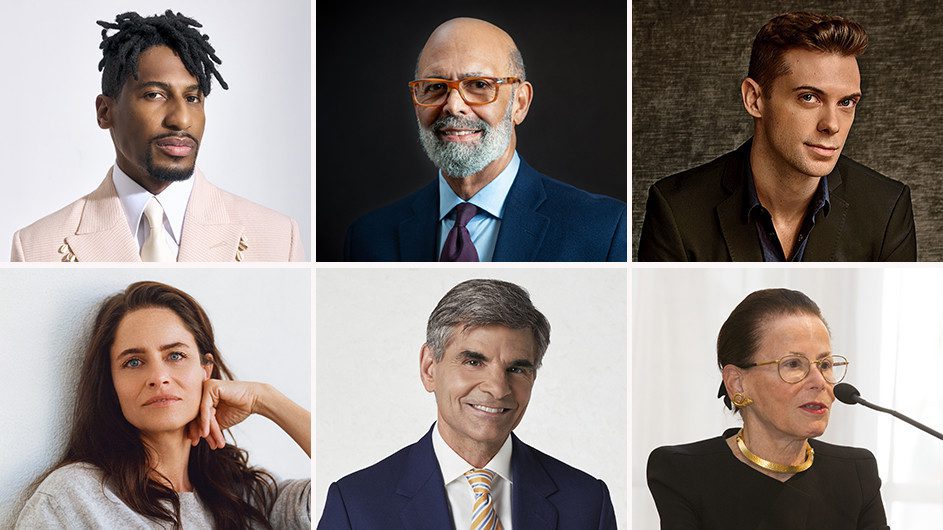
Dr. Michael Lomax, president and CEO, UNCF, received an honorary degree from his alma mater Columbia University on May 20. The university’s 2026 honorary degree recipients also include Jon Batiste, Michael Novak, Amanda Peet, George Stephanopoulos and Harriet Zuckerman.
It was against this tumultuous backdrop that Dr. Lomax came to Columbia University to begin a new educational chapter at the Ivy League university in America’s biggest city. “The doors were open, but I still had to find my way, make my own way out of no way,” he recalls with candor. “I was an invisible Morehouse Man at a university where nobody knew about Morehouse.”
The academic stipulations did not faze him. “I had to pass two language exams,” Dr. Lomax explained. “I was fluent in Spanish, but Columbia wouldn’t accept that as my Romance language. So, I took an intensive reading course in French and a refresher in Latin and completed both requirements before beginning my literature studies in September.”
Despite the fact that there were few Black students on campus, being a minority did not deter Dr. Lomax from his academic objective. “I was the only Black student in any of my classes that Fall, and nobody had heard of Morehouse,” he said. “But I soldiered on and completed a year of studies and exams with high honors, and I had a draft of my thesis by the spring.”
It was this tenacity which kept him from being drafted. “I was close enough to earning my master’s that Morehouse would hire me for the Fall, and teaching there would earn me a draft exemption that would keep me out of the Vietnam War,” he shared.
Columbia University afforded Dr. Lomax both intellectual self-belief and the chance to imbibe a plethora of intoxicating new ideas. “My year at Columbia was more than a rigorous academic test, more than a proof that Morehouse, though unknown, had prepared me to compete at the highest academic levels and enabled me to meet the most exacting academic standards,” he said. “That year had also been an introduction to the forces and voices that were commanding the national and international debates of the day: The anti-Vietnam War movement, the new radicalism of the Students for Democratic Society (SDS), the Biafran War in Nigeria and the growing conservative movement that would elect Richard Nixon president.
“There was also the nascent gay rights and women’s rights movements that were emerging on the Columbia campus,” he continued. “And every day at noon, in between library studying and afternoon seminars, I would sit outside the Butler Library to eat my lunch and I would listen to the varied voices of this NYC version of Hyde Park corner and drink in the ideas that were current and swirling through the campus and out into the world.”
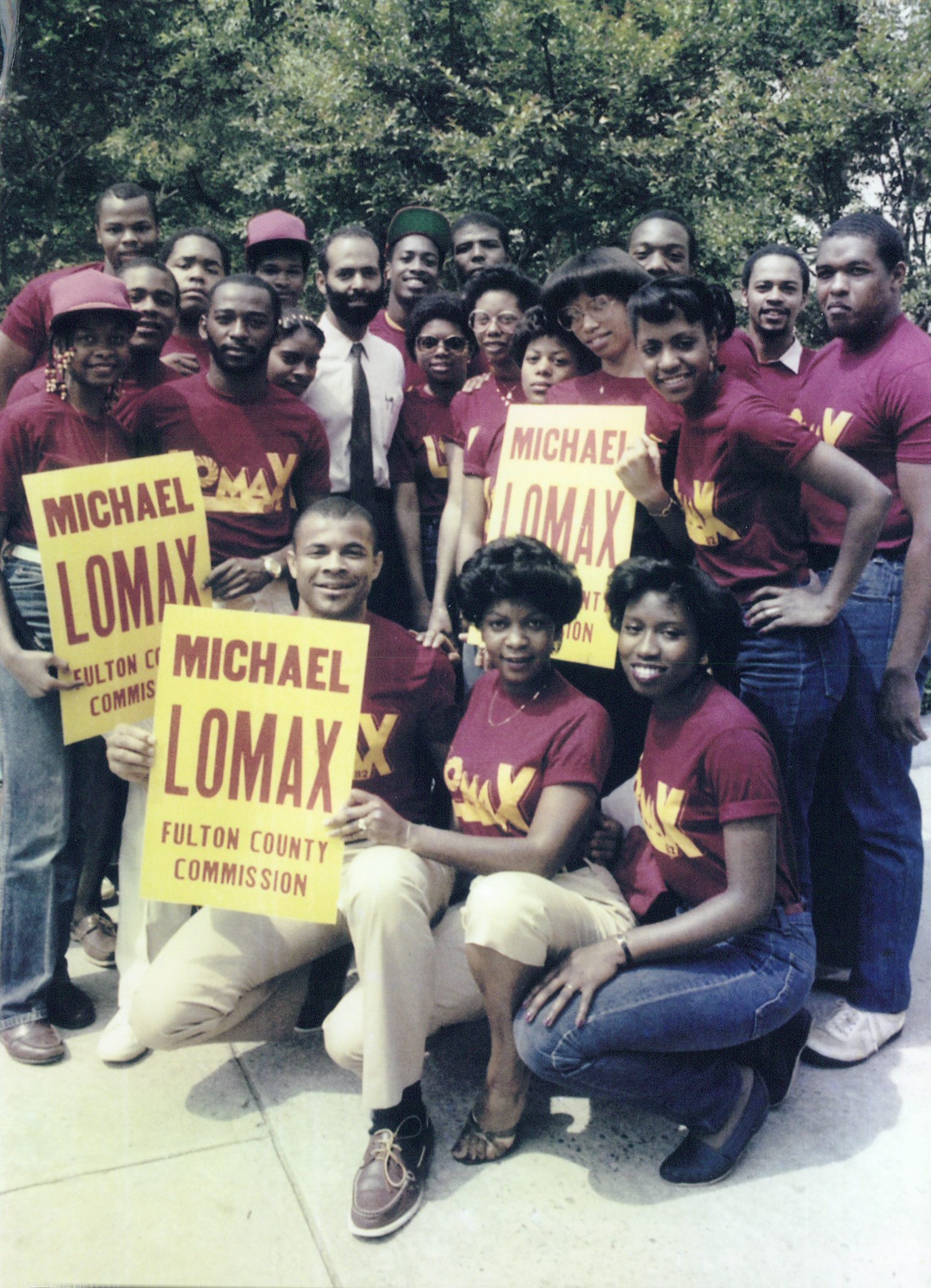
In 1978, Dr. Lomax was elected to the Fulton County Board of Commissioners and became the first African American to be elected as board chairman.
Studying at Columbia helped Dr. Lomax to pursue not just the contemplative life of a scholar in an ivory tower, but also that of an intellectual engagé—a man out in the world, devoted to an active life of leadership, service and making a tangible difference in the lives of others.
“I was invisible, but I was absorbing and, in my own way, preparing for the life I would live when I returned to Atlanta, to Morehouse and eventually to Emory for my Ph.D.,” he said. “I was beginning to see as powerful as rigorous academic learning was, that I would have to prepare to engage in the world and do my best to shape it. I owed that to Dr. King and his martyrdom, his sacrifice. Education activist would be my calling.”
Thus, Dr. Lomax’s return to Columbia to receive an honorary doctorate is replete with significance. As he says with discernible pride, “It is in some ways a validation of the life course I have pursued since I left in 1969. Columbia is saying, ‘Michael, we see you now!’”
On such an occasion, many would be tempted to look back contentedly, satiated with warm nostalgia. But, whilst deeply touched by the accolade, Dr. Lomax is looking ahead to see how this honor can further galvanize him to give back.
“I am humbled and grateful, but it is also now a booster rocket, an accelerant for the next stage of my journey, as I wind down my work at UNCF and return to my alma mater, Morehouse, in the summer of 2027,” he shared. “There, I will be with students once again, rejoin the faculty, reflect on my journey, tell my story, write my testament and importantly use all that I have learned to play my final part to strengthen the capabilities and reshape the roles and work that great institutions like Morehouse, Columbia and Emory—in whose classrooms I have been forged—can and must play going forward.”
It is not often that ruminations on the current state of the world reference both an English Romantic poet and a bona fide Motown legend. But Dr. Lomax is someone who can effortlessly oscillate between the Western literary canon and Black popular culture. “We live in deeply troubling times,” he declared with immutable conviction and perspicacity. “I believe we are meant to step up now and meet the challenge of times such as these with their forebodings and darkness. As Shelley asked, ‘If winter comes, can spring be far behind?’ And we can remember the English theologian Thomas Fuller’s earlier words, ‘It is always darkest just before the Day dawneth.’
“I take heart from the words of the great philosopher Marvin Gay, ‘War is not the answer. Only love can conquer hate,’” he said.
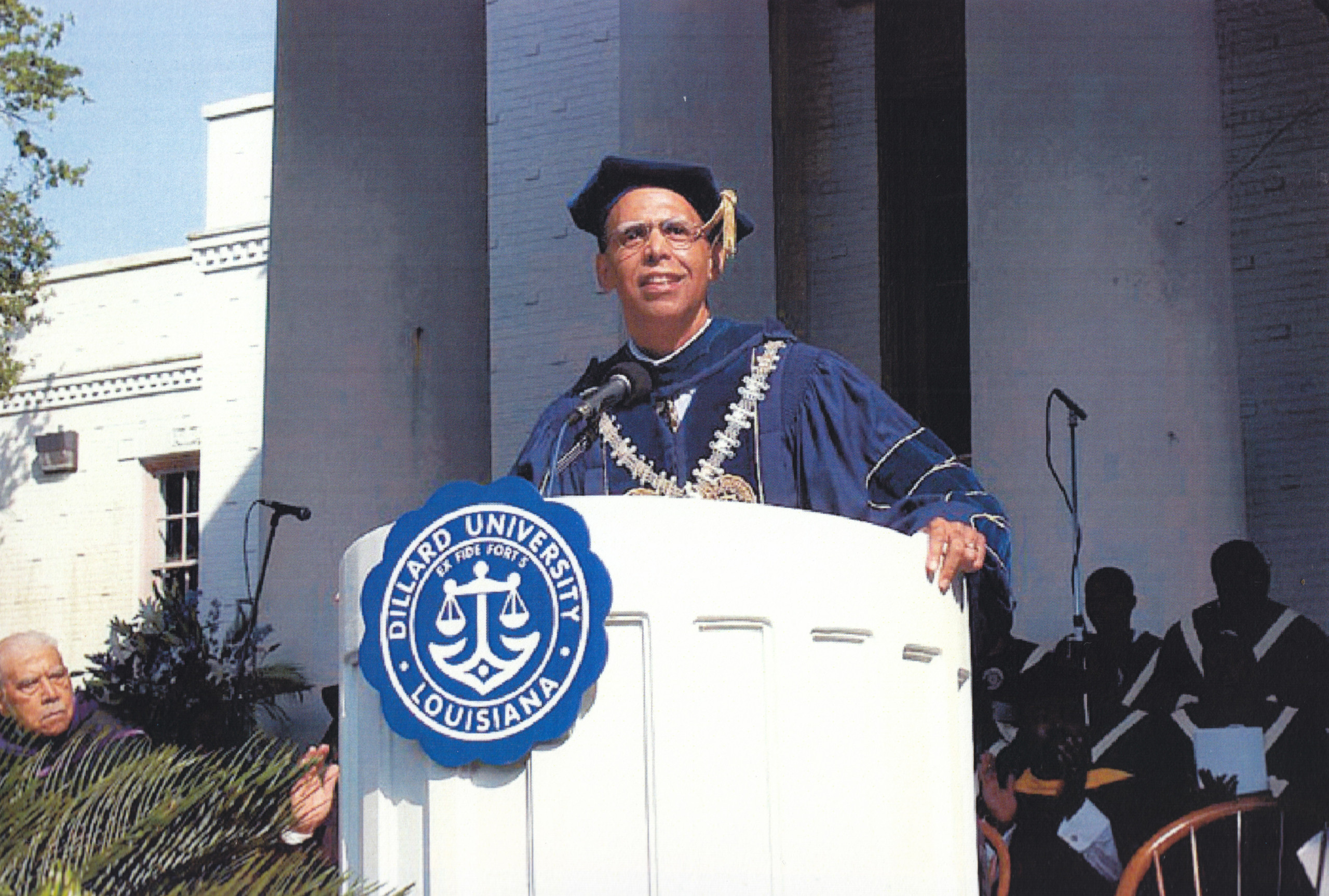
From 1997 to 2004, Dr. Lomax served as the fifth president of Dillard University.
Today, Dr. Lomax returns in triumph to Columbia University after almost 60 years. Thankfully, for UNCF and for HBCU students all over America, he is no longer an “invisible man.” His visibility and prominence on both the local and national stage, over the course of an exceptionally distinguished career of public service—first as a politician in Atlanta, GA, then as an “education activist” at Dillard University (another UNCF-member institution) and now, for the last 21 years leading UNCF—has effected monumental change for marginalized African American communities and been a remarkable, if not life-changing catalyst for Black educational parity, uplift and flourishing.
Dr. Lomax, do not doubt—we all see you now, and we salute you.
Lindsay Johns is UNCF’s Global Correspondent. He is based in London.