
Annual Report 2025 PDF Download
TABLE OF CONTENTS
Our Mission
UNCF envisions a nation where all Americans have equal access to a college education that prepares them for rich intellectual lives, competitive and fulfilling careers, engaged citizenship and service to our nation.
UNCF’s mission is to build a robust and nationally recognized pipeline of underrepresented students who, because of UNCF support, become highly qualified college graduates and to ensure that our network of member institutions is a respected model of best practices in moving students to and through college.
UNCF’s North Star is to increase the total annual number of African American college graduates by focusing on activities that ensure more students are college-ready, enroll in college and persist to graduation. This is done through a three-pillar strategy:
• Positioning member institutions as a viable college option for students and investing in institutional capacity to improve student outcomes.
• Creating transformational support programs to ensure that students are enrolling and persisting through college completion.
• Building awareness of educational attainment and cultivating college-going behaviors within the African American community.
Our Momentum Toward Growth Continues
A message from the Chairman of the Board and the President and CEODear Friend,
We are proud to share UNCF’s fiscal year 2025 annual report and invite you to read stories about our impact—made possible by the investments of donors and partners like you.
The report reveals UNCF’s unparalleled position of strength. We are 81 years young and moving forward by pursuing aspirational goals with the ultimate goal of transformation.
The fiscal year was marked by significant milestones that we are celebrating while seeking to accelerate progress.
We strengthened the financial foundation of our organization. Since 2020, UNCF has raised more than $1.3 billion. In fact, revenue exceeded our targets every year for the past five years, and we expect it to do so again this year. As a result, UNCF’s endowment now stands at $467 million—and we expect to have approximately $500 million under management by the end of this fiscal year.
However, we are more than a fundraising organization. We are also focused on building the infrastructure, partnerships and capabilities that will fundamentally change how our member institutions deliver a quality education to their students. We are moving from helping institutions to survive to ensuring they thrive. And we continued that momentum in fiscal year 2025.
UNCF’s Capital Campaign achieved 69.5% of our $1 billion revenue goal. Accomplishments this year include establishing a pooled endowment fund to increase the endowments at our 37 member institutions, which are critical to their sustainability and future viability.
Supporting UNCF’s member institutions remains our number one priority. Through the generosity of our donors and the unwavering commitment of our fundraising team, UNCF significantly enhanced the resources available to our member schools. In fiscal year 2025, we honored our commitment by providing $46.8 million in cash support. This distribution includes $19.5 million for unrestricted purposes and $27.3 million for restricted scholarships, student emergency aid and UNCF’s Institute for Capacity Building programs.
In fiscal year 2025, UNCF’s Direct Response Program again showed its extraordinary fundraising power and resilience. Its direct mail and online channels generated $14.1 million from more than 148,000 individual donors.
Thanks to strong donor support and the dedication of our UNCF team, we continued making tremendous progress in FY25.
That progress caught the attention of business leader Robert Kraft, who recognized UNCF’s impact and legacy of service. Kraft, chairman and CEO of the Kraft Group and founder of the Blue Square Alliance Against Hate, formerly the Foundation to Combat Antisemitism (FCAS), made a generous donation of $1 million to UNCF in fiscal year 2025. These funds support educational initiatives at historically Black colleges and universities (HBCUs) and other institutions that promote unity and strengthen partnerships between Black and Jewish students to combat all forms of hate. Kraft’s catalytic gift allowed for the creation of a series of Unity Dinners across the country on college campuses that brought Black and Jewish students together for dialogue in the hopes of establishing lasting relationships. The Unity Dinners are resurrecting the allyship between Black and Jewish communities that dates back generations.
In FY25, we launched Project ACCLAIM, an innovative program to enhance the financial literacy of HBCU students attending Morehouse College and Howard University. The initiative, which was made possible by a transformative $10 million gift from Adage Capital Management and Elizabeth and Phill Gross, forged new partnerships that amplify our impact. The resilience and determination of our students continue to inspire us, reminding us of the importance of our work in providing them with the resources they need to succeed.
This past fiscal year, UNCF released the most authoritative and comprehensive research on the economic impact of HBCUs. Transforming Futures: The Economic Engine of HBCUs revealed these institutions continue punching above their weight, contributing $16.5 billion to the national economy and creating 136,000 jobs. If the nation’s 101 HBCUs were a company, they would rank among the top 50 of the nation’s Fortune 500 companies in job creation.
In this annual report, you will find stories of hope and perseverance from the students whose lives have been changed thanks to your generous support. Each narrative highlights the critical role that education plays in shaping futures and strengthening communities. We invite you to explore these stories, as they are a testament to the power of investing in education.
We would like to extend our heartfelt gratitude to our donors, partners and advocates. Your contributions are vital to our mission, and together, we are making a tangible difference in the lives of countless students across the nation. As we look ahead, we remain committed to our vision of a nation where all students have equal access to a quality education, and we have much more work to do.
Whether you’ve supported UNCF for decades or are considering joining us for the first time, our 81 years of impact should give you confidence that we know how to deliver. And we’re just getting started. After all, “A mind is a terrible thing to waste.” ®
Sincerely,
IMPACT
HBCU Economic Impact Report Reveals Universities’ Unmatched Contributions, Urgent Funding Needs
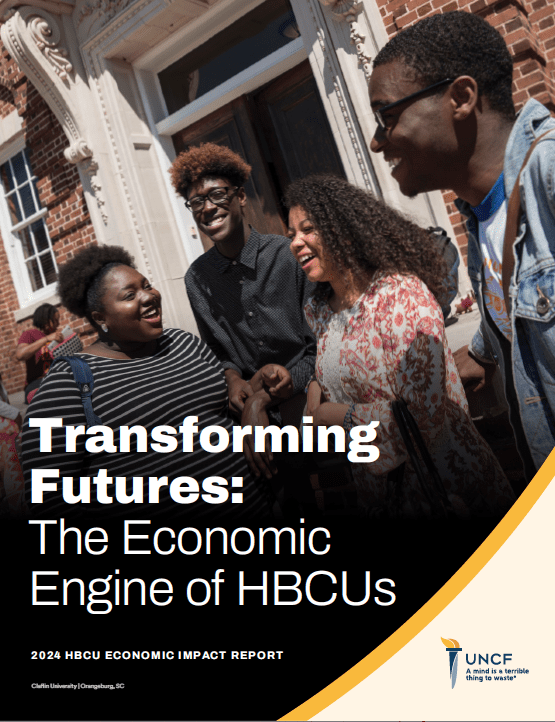
UNCF’s economic impact report reveals that HBCUs generate $16.5 billion annually in direct economic impact nationally and calls for immediate action to secure the future of America’s Black higher education institutions.
HBCUs have long been pillars of educational excellence and economic engines, driving prosperity in their local communities and nationwide. Despite these contributions, chronic underfunding threatens their ability to sustain this impact. Transforming Futures: The Economic Engines of HBCUs underscores the urgent need for equitable and sustainable funding to ensure HBCUs can continue their vital role in promoting social mobility and economic growth. The report calls on the public to advocate for these essential institutions.
“This report reaffirms what we have always known about the resilience of HBCUs: despite a deadly pandemic, social unrest caused by the murders of George Floyd and Breonna Taylor and the economic uncertainties of the past seven years, HBCUs continue to do more with less—not only in preparing the next generation of leaders but also in contributing to our nation’s economic impact,” said Dr. Michael L. Lomax, president and CEO, UNCF.
Learn how historically Black colleges and universities (HBCUs) make a vital difference for students of all backgrounds and contribute an enormous amount to the United States economy.
New report reveals $16.5 billion in economic impact and calls for immediate action to secure the future of America's Black higher education institutions.
Key findings in the 2024 HBCU economic impact report:
- HBCUs generate $16.5 billion in direct economic impact nationally.
- If they were a company, the nation’s HBCUs would place in the top 50 of the nation’s Fortune 500 companies in job creation.
- Collectively, 136,048 jobs exist because of HBCUs.
- On average, for each job created on campus, 1.5 off-campus jobs exist because of spending related to the institution.
- HBCUs are far more accessible to students and more successful at moving students from the bottom 40% of the country’s income distribution to the top 60%, signaling social mobility.
- The 51,269 HBCU graduates in the class of 2021 can expect work-life earnings of $146 billion, 57% more than the $93 billion they could expect without their degrees or certificates.
As UNCF’s economic impact report reveals, HBCUs and their students continue punching above their weight. UNCF continues to award scholarships and administer other programs through the generosity of committed donors, navigating the path forward to achieve better futures for us all.
IMPACT
Groundbreaking UNCF Study Highlights Importance of Black Teachers
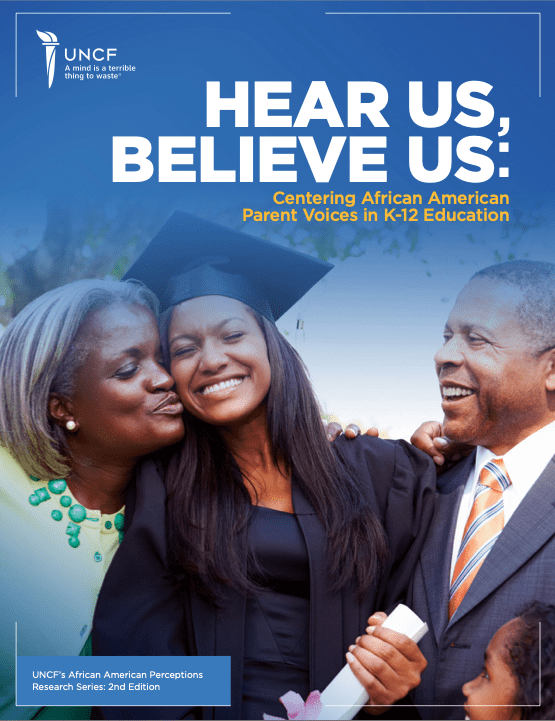
UNCF’s report, “Hear Us, Believe Us: Centering African American Parent Voices in K-12 Education”, offers a comprehensive analysis of the experiences, challenges and aspirations of African American parents in relation to race, college readiness, parental engagement and more.
The report, entitled “Hear Us, Believe Us: Centering African American Parent Voices in K-12 Education,” offers a comprehensive analysis of the experiences, challenges and aspirations of African American parents in relation to race, college readiness, parental engagement and more.
Through the report, UNCF underscored the significant, positive influence that Black teachers have on students, families and communities. The report found that more than 90% of Black parents surveyed said they want more opportunities to be involved in their children’s education and to provide more input into education-related laws. UNCF conducted focus groups and implemented a national survey of 500 low- to moderate-income Black parents. Additionally, a subset of 1,200 Black parents was surveyed in Chicago, Indianapolis, Atlanta, Houston, Memphis and New Orleans to assess city-level trends.
“Across several indicators in the study, Black parents reported better experiences when their child attended schools with more Black teachers,” said Dr. Meredith Anderson, author of the report and director, K-12 research, UNCF. “While research abounds on the positive effects of Black teachers on students, this report emphasizes the parent voice in this important scholarship. This report substantiates what we have known for decades: Black teachers matter.”
The report, based on extensive national quantitative research and focus groups, highlights the crucial role that African American parents play in their children’s education. It underscores the importance of understanding their unique perspectives and incorporating them into education policies and practices.
Key findings from the report include:
1. Black parents report higher college aspirations for their children and lower instances of school suspensions when there are more Black teachers at their child’s school.
- For Black parents and caregivers whose children attended schools where many or most teachers were Black, the probability that their child received exclusionary discipline is almost three times lower than if their child attended schools with fewer Black teachers.
- Black parents also felt more respected when their child attended schools with more Black teachers.
2. Black parents greatly value higher education and are deeply engaged and invested in their child’s education.
- 84% of Black parents believe it is important for their child to attend and graduate college and over 80% check their child’s homework and speak to their child’s teacher on a regular basis.
- 93% of Black parents say they want more opportunities to be involved in their child’s education and to provide input into education laws.
3. Black parents want to see more Black leaders in education.
- 70% of African American parents and caregivers believe the involvement of African American leaders and organizations will make school improvement efforts more effective.
4. School safety is a key concern for Black parents and caregivers.
- 80% of African American parents and caregivers rank safety as the most important factor for school selection.
“What we have known at UNCF for decades is that Black parents are deeply engaged in the educational lives of their children, yet far too often they are denigrated and deemed disengaged about their children’s learning environment,” Anderson said. “Black parents are concerned about opportunity gaps and want better resources for their children. They want to see more Black education leaders and organizations in education; and they want more opportunities to be involved and have their voices heard.”
The report concludes with a series of recommendations aimed at addressing the concerns and aspirations of African American parents. These recommendations include a call to action:
Recommendations for the K-12 Sector
- Invest unapologetically in Black teachers
- Create more intentional opportunities for parent involvement
- Create a learning environment that reflects African American history and culture
- Partner with local organizations to provide resources and services for families
- Value and prioritize support staff in school budgets
- Prioritize student safety
Hear from the Parents Who Participated in the Study
Recommendations for Higher Education
- Make intentional efforts to expose students and families to college opportunities
- Create intentional pipelines with districts and charter management organizations to increase educator diversity
- Ensure teacher training programs include anti-racist, culturally relevant teaching practices
- Partner with K-12 schools and districts to provide financial literacy to students and families
UNCF is committed to utilizing the findings of this report to drive positive change in education. Through its programs, scholarships and advocacy efforts, UNCF will continue to work towards a future where every African American student has access to a quality education that prepares them for success. That commitment ensures better futures for all American students.
IMPACT
New Research from UNCF, Healthy Minds Network Shows Strong Mental Health Outcomes Among HBCU Students
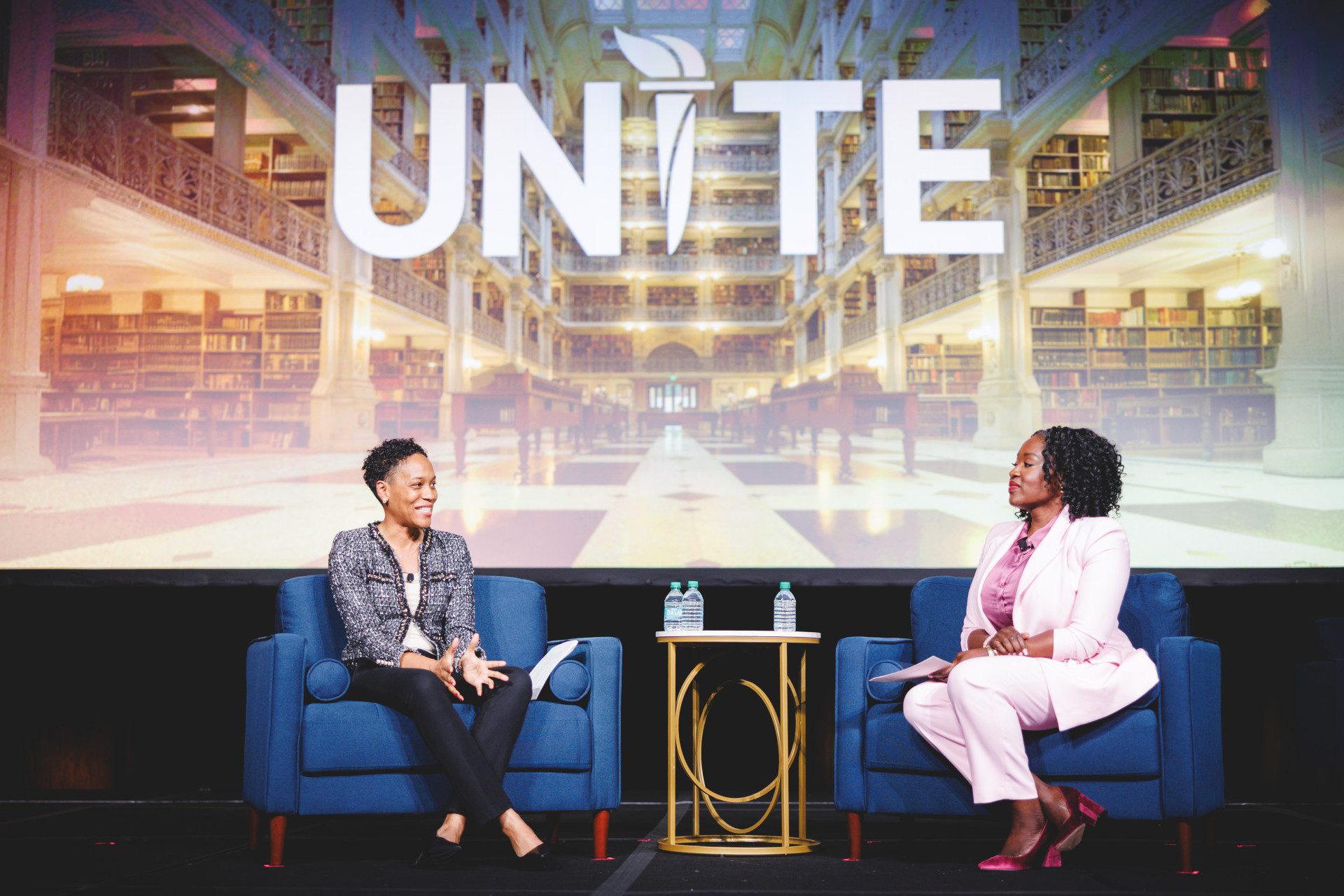
Dr. Amelia Parnell, president of NASPA (left), and Dr. Zainab Okolo, senior vice president for policy, advocacy, and government relations at The Jed Foundation (right), shared insights during a plenary session at UNITE 2025 in Atlanta, GA, centered on advancing student support and mental health.
The report, Flourishing: Bolstering the Mental Health of Students at HBCUs and PBIs, examined mental health indicators among 2,504 students across 16 HBCUs and two predominantly Black institutions (PBIs) during the 2022-2023 and 2023-2024 academic years.
“This research confirms what we’ve long understood about the unique power of HBCUs to nurture, not just enable, academic achievement,” said Dr. Michael L. Lomax, president and CEO, UNCF. “HBCUs provide a holistic well-being among HBCU students. Even with fewer resources than our peers, these institutions create environments where students are affirmed and celebrated, fostering remarkable mental resilience despite significant socioeconomic challenges.”
The study was conducted in partnership with UNCF’s Institute for Capacity Building, the Healthy Minds Network and The Steve Fund. Its findings support what UNCF researchers call “The HBCU Effect” on mental health:
- Higher flourishing rates: 45% of HBCU students report “flourishing” mental health compared to 36% in national samples and 38% among Black students at predominantly White institutions (PWIs).
- Stronger sense of belonging: 83% of HBCU students report feeling part of their campus community versus 73% nationally and 72% of Black students at PWIs.
- Lower anxiety and substance use: HBCU students report significantly lower rates of anxiety, substance use disorders and eating disorders than the national average.
- More open about emotions: HBCU students are significantly less likely to keep negative feelings to themselves when feeling sad (74%) compared to Black students at PWIs (86%).
- Greater institutional trust: More HBCU students believe their institutions prioritize mental well-being (78%) compared to Black students at PWIs (73%).
Despite these positive outcomes, the research identified notable mental health challenges for HBCU students:
- Financial stress impacts mental health: 51% of HBCU students report their financial situation as “always” or “often” stressful, with 78% of financially stressed students experiencing one or more mental health problems.
- Unmet treatment needs: 54% of HBCU students with moderate to severe symptoms reported receiving no mental health treatment, higher than both the national average (41%) and Black students at PWIs (47%).
- Stigma remains a barrier: HBCU students report higher rates of perceived stigma around mental health treatment (52%) compared to national averages (41%).
While HBCUs are achieving remarkable outcomes with limited resources, their students still face significant barriers to receiving mental health support.
“With targeted investment and policy changes, we could dramatically improve outcomes for these resilient students. These findings demand attention from policymakers and higher education leaders,” Dr. Lomax added.
These findings reinforce what UNCF has championed for more than eight decades—that investing in HBCUs and their students strengthens not only individuals but entire communities and our nation’s future. When students are supported academically, emotionally and financially, they flourish. And when they flourish, they go on to build stronger communities, more vibrant workplaces and better futures for us all. As UNCF’s motto reminds us, “A mind is a terrible thing to waste.”®
IMPACT
UNCF Report Highlights HBCUs’ Role in Strengthening the Black Teacher Pipeline
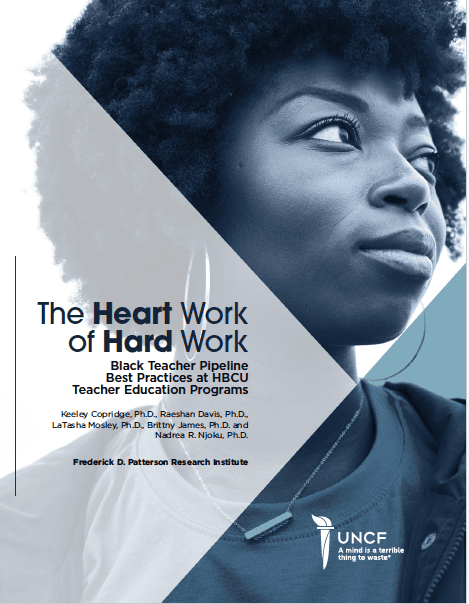
This UNCF report provides a snapshot of best practices from four HBCUs to strengthen the Black teacher pipeline. The research underscores the significant impact Black teachers have on Black students, including serving as role models, enhancing educational experiences, boosting graduation and college enrollment rates and improving reading and mathematics proficiency and end-of-year performance.
The report, The Heart Work of Hard Work: Black Teacher Pipeline Best Practices at HBCU Teacher Education Programs, features a snapshot of recruitment, culturally responsive teaching, curricular and co-curricular strategies that strengthen the Black teacher pipeline from four HBCUs: UNCF-member Huston-Tillotson University, Alabama A&M University, Albany State University and Fayetteville State University. The report, made possible by a donation from the Voya Financial Foundation, was authored by Dr. Nadrea Njoku, former assistant vice president, Frederick D. Patterson Research Institute (FDPRI), UNCF; Dr. Keeley Copridge, senior research associate, FDPRI, UNCF; Dr. LaTasha Mosley, graduate research fellow, FDPRI, UNCF; Dr. Raeshan Davis, a former research fellow, FDPRI, UNCF; and Dr. Brittny James, consultant, Insight Consulting and Associates. The four HBCUs highlighted in the report rank among the top 25 four-year HBCUs producing Black teacher graduates across various K-12 fields.
The research underscores the significant impact Black teachers have on Black students including serving as role models, enhancing educational experiences, boosting graduation and college enrollment rates and improving reading and mathematics proficiency and end-of-year performance.
Findings from the report were shared Feb. 13, 2024, as part of the “Equity in Education: Advancing Opportunities for Black Teachers and Parents” virtual learning series conducted by FDPRI. More information is available at UNCF.org/EquityinEd.
While HBCUs represent only 3% of colleges and universities nationwide, they produce 11% of all Black graduates and 50% of all Black educators, according to data from the FDPRI and the National Association for Equal Opportunity in Higher Education.
“Black teachers are essential to Black students’ educational, social and emotional development,” said Copridge, one of the report’s authors. “Yet Black teachers represent only 7% of America’s teaching workforce. To diversify the nation’s P-12 system, it is critical to strengthen the Black teacher pipeline and HBCUs are central to that effort.”
The report identifies historical and systemic barriers contributing to the scarcity of Black teachers, including desegregation, racism and standardized testing policies that resulted in nearly 100,000 minority teachers in 35 states losing their licenses from the late 1970s through the early 1990s.
“Black teachers are intimately aware of these barriers, but they continue to maintain high expectations for their students’ success,” said Njoku, another report author. “Research shows Black teachers have a deep understanding of Black students’ lives in and outside the classroom.”
Historically Black colleges and universities (HBCUs) are instrumental in the proliferation of Black graduates. HBCUs make up only three percent of colleges and universities, yet produce 50% of Black teachers (UNCF, National Association for Equal Opportunity in Higher Education, 2008).
The report calls for continued research on culturally responsive curriculum, examination of teacher certification exams, increased federal and state funding, partnerships with private organizations, expanded resources for HBCU faculty and the promotion of nontraditional pathways into teaching.
By issuing this report, UNCF demonstrates how strategic investment in HBCUs strengthens the nation’s public education system and ensures a new generation of Black educators is prepared to lead. Donor support enables HBCUs to implement innovative practices, overcome systemic barriers and cultivate teachers who inspire, mentor and transform the lives of students across the country. Through these efforts, UNCF and its partners are creating better futures for all Americans—because when HBCUs thrive, the nation’s classrooms thrive.
IMPACT
Biden Administration Announces Big Investment Totals for HBCUs
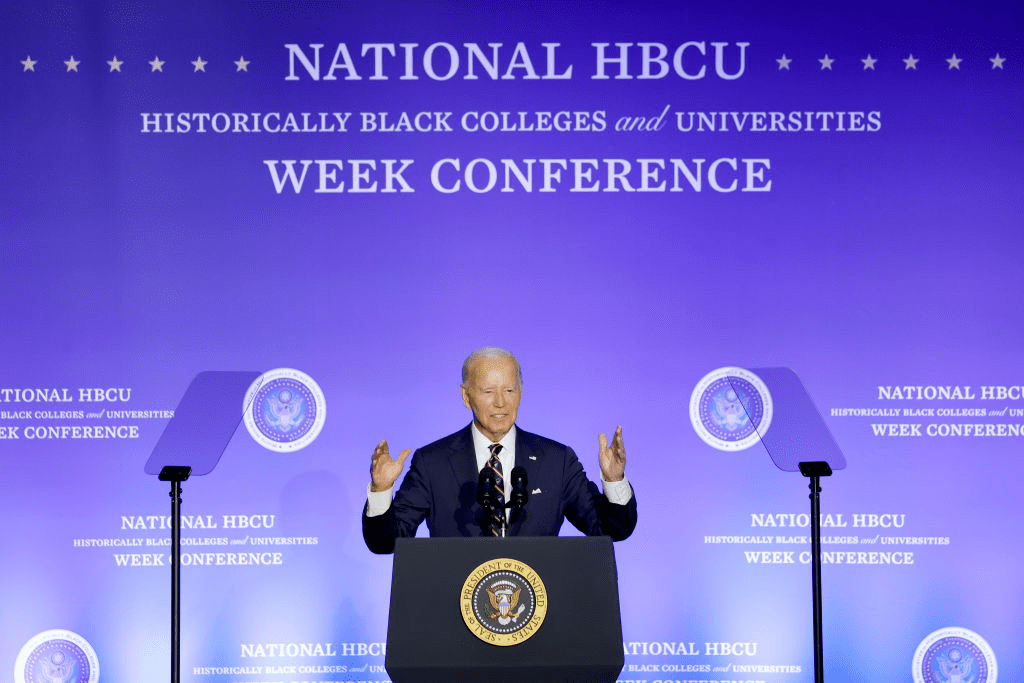
Former U.S. President Joe Biden speaks at the 2024 National Historically Black Colleges and Universities (HBCU) Week Conference on Sept. 16, 2024, in Philadelphia, PA.
“UNCF works with both political parties and is nonpartisan, and even with that I can tell you no other administration has prioritized HBCUs like this one,” said Dr. Michael L. Lomax, president and chief executive officer, UNCF.
$16B in ‘Whole of Government’ Investments
“HBCUs have been chronically underfunded, systemically, since inception,” Dr. Lomax continued. “While the efforts of the Biden-Harris Administration are helpful, let me be clear: more is needed via federal and state governments as well as our philanthropic partners.”
“Big efforts like this are done purposefully, not by happenstance,” said Lodriguez Murray, senior vice president, public policy and government affairs, UNCF. “President Biden and Vice President Harris came into office proposing nearly $9 billion for HBCUs via the ARP and their infrastructure plan.”
“The funds in the $16 billion federal investment showcase a dual strategy that we at UNCF have also embraced, prioritizing institutions and students,” Murray added. “Infrastructure funds are necessary for institutions, and students coming from a lower socioeconomic background must have the Pell Grant doubled. We at UNCF want to work with everyone to ensure these outcomes are achieved.”
And that kind of support helps lead to better futures for all Americans.
INNOVATE
UNCF Launches Historic PSA Campaign
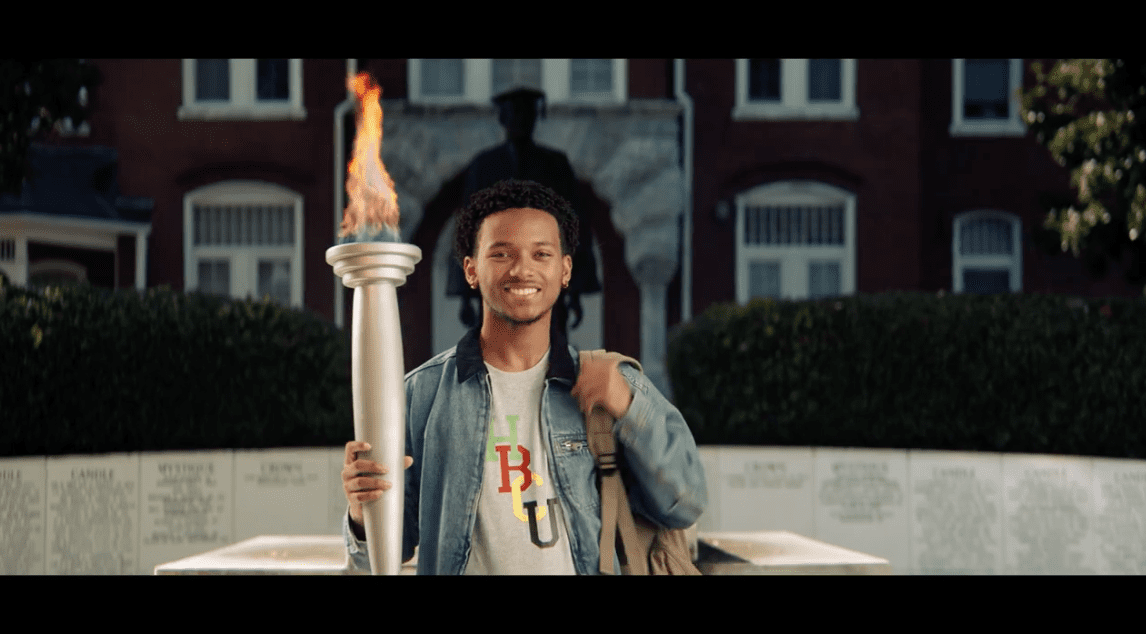
The public service announcement (PSA) campaign called “Light the Way” symbolizes UNCF’s legacy. For more than 80 years, UNCF has helped talented, deserving students get to and through college successfully.
“UNCF: Light the Way” marks the first national broadcast PSA the organization has released in more than a decade.
“We are extremely excited to release this new PSA demonstrating UNCF’s impact and commitment to making higher education obtainable for all,” said Monique LeNoir, senior vice president of communications at UNCF. “With this incredible PSA, we are inspiring new generations to invest in their education and reminding them that UNCF provides the resources to help students get to and through college.”
The 30-second video, filmed on the campus of UNCF-member institution Morehouse College, draws on the iconic symbolism of the UNCF torch of leadership. The spot highlights the passing of the torch to students, symbolizing how UNCF’s legacy continues to empower the next generation to pursue their dreams and unlock new opportunities.
The video debuted during Black History Month and has reached national audiences through movie theaters, cable television, the Ad Council, UNCF’s national social media channels and major video streaming platforms.
Created by Carol H. Williams Advertising—the nation’s longest-running independent multicultural marketing firm—the PSA raises awareness of UNCF’s mission to empower students and ensure access to higher education. It stands as a powerful reminder of the importance of education and the essential role UNCF plays in expanding opportunity for students across the country.
This new PSA helps elevate UNCF’s visibility on a national stage, shining a light on the organization’s unwavering mission to invest in the minds and futures of students across the United States. By reaching millions of Americans, “Light the Way” reminds audiences of the life-changing impact of education and strengthens UNCF’s footing to continue helping students get to and through college successfully. Through this PSA, we honor our legacy, inspire future generations and uphold our enduring motto: “A mind is a terrible thing to waste.”®
INNOVATE
Project ACCLAIM Launches to Strengthen HBCU Students’ Pathways into Financial Services

(L to R) Phill Gross, co-founder and managing director, Adage Capital Management; Kim Godwin, former president, ABC News, and career journalist; Mellody Hobson, co-CEO and president, Ariel Investments; and Dr. Michael L. Lomax, president and CEO, UNCF, had a conversation on advancing Black wealth and economic mobility at an event in Martha’s Vineyard in 2024.
The announcement was made on Aug. 15, 2024, during UNCF’s networking reception at Harbor View Hotel in Edgartown, MA, featuring a panel of industry and philanthropic leaders including Dr. Michael L. Lomax, president and CEO, UNCF; Phill Gross, co-founder, managing director, and healthcare portfolio manager, Adage Capital Management; and Mellody Hobson, co-CEO, Ariel Investments.
“Project ACCLAIM represents a groundbreaking partnership between UNCF, Adage Capital Management and visionary philanthropists Elizabeth and Phill Gross,” said Dr. Lomax. “By empowering HBCU students with mentorship, real-world experience and access to capital, this initiative equips them to become future leaders who drive positive change within the industry and their communities.”
Project ACCLAIM provides students with rigorous coursework, hands-on investment experience and co-curricular activities designed to enhance finance and investing curricula. Students at Howard and Morehouse are now managing a $4 million student investment pool, giving them real-world exposure to asset management while supporting institutional priorities.
“Investing in the next generation of leaders is essential to the long-term health of the finance industry,” said Phill Gross. “With UNCF’s support, we aim to build a model that can expand to other HBCUs and attract additional investment while scaling to other HBCUs across the country.”
The program is administered by UNCF’s Institute for Capacity Building, which plans to expand the program to other colleges and universities. Planned endowments and grant programs will be available to support HBCUs interested in establishing similar initiatives.
Project ACCLAIM exemplifies how UNCF donors and partners are shaping opportunities that have lasting impact. By equipping HBCU students with the skills, mentorship and experiential learning necessary to thrive in financial services, this initiative strengthens careers, communities and the broader United States economy. Project ACCLAIM is an innovative approach to education, ensuring that more American students are given the real-world experience to drive innovation, opportunities and growth nationwide.
INNOVATE
Robert Kraft Donates $1 Million to Support New UNCF Initiative Combating Hate and Bigotry
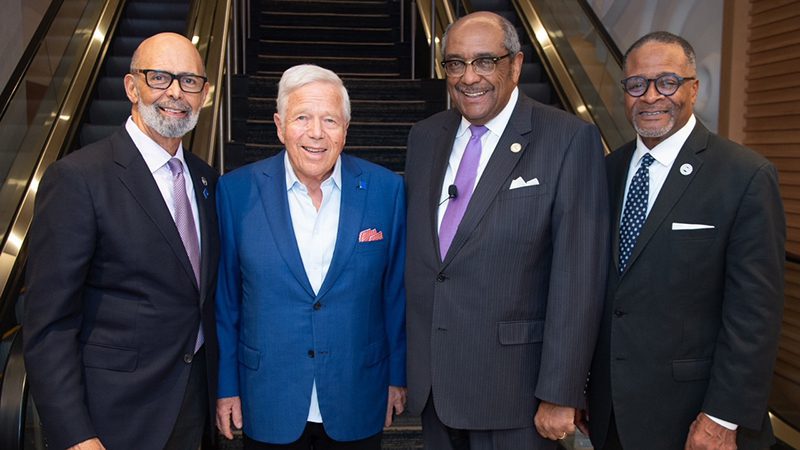
(L to R) Dr. Michael L. Lomax, president and CEO, UNCF; Robert Kraft, chairman and CEO of the Kraft Group and founder of the Blue Square Alliance Against Hate; Milton H. Jones, Jr., board chair, UNCF; and Dr. George T. French, president, Clark Atlanta University.
The Tikkun Olam Initiative is designed to help cultivate the next generation of leaders committed to combating all forms of hate while promoting cross-cultural understanding and student leadership. Kraft announced the donation during a national meeting of UNCF’s Board of Directors in 2024, marking a highlight as UNCF launched its yearlong 80th anniversary celebration.
“We are incredibly grateful for Robert Kraft’s extraordinary generosity and his commitment to supporting UNCF’s Tikkun Olam Initiative, which promotes unity and respect among students from diverse backgrounds,” said UNCF Board Chair Milton H. Jones Jr. “This $1 million donation will have a profound impact on our efforts to create a more inclusive society. It strengthens our ability to combat hate while inspiring others to join the fight.”
Dr. Michael L. Lomax, UNCF president and CEO, also expressed appreciation for Kraft’s leadership and partnership. “We are immensely grateful to Robert Kraft for his unwavering support of UNCF and his commitment to combating hate,” Lomax said. “This donation enables us to develop innovative programs and resources that empower students to serve as agents of change in their communities. Together, we can work toward a future rooted in mutual respect, understanding and love.”
In fiscal year 2025, UNCF convened a series of Tikkun Olam Initiative Unity Dinners to foster connection and understanding between Black and Jewish communities. Created in partnership with the Blue Square Alliance Against Hate and Hillel International, the dinners seek to rebuild historic bonds between the two communities while exploring their distinct experiences. The gatherings bring together Black and Jewish students to engage in dialogue, share personal perspectives, address social challenges and build meaningful relationships centered on a more just and inclusive future.
The Unity Dinner series launched Oct. 21, 2024, in Atlanta, with more than 80 students representing UNCF-member institutions Clark Atlanta University, Morehouse College and Spelman College, along with Agnes Scott College, Emory University, Georgia Tech, Georgia State University, Kennesaw State University and Morris Brown College. Additional dinners were held at George Washington University in Washington, DC, with 82 students in attendance, and at Rice University in Houston, TX, with 75 students participating.
On Feb. 7, 2025, UNCF, the Blue Square Alliance Against Hate and Hillel International hosted the first Unity Summit during Super Bowl LIX at Xavier University of Louisiana. The summit convened more than 100 Black and Jewish student-athletes from Dillard University, Loyola University New Orleans, Louisiana State University, Southern University, the University of New Orleans, Tulane University and Xavier University of Louisiana.
The summit featured panel discussions with prominent sports figures, including quarterback Jake Retzlaff of Brigham Young University, running back Leonard Fournette of the Buffalo Bills, placekicker Greg Joseph of the New York Jets and former basketball player and coach Nancy Lieberman of the WNBA and NBA. The program also included a conversation between Kraft and musician and activist Meek Mill.
During the summit, Kraft reaffirmed his commitment to fostering a society free from hate and discrimination. “I am honored to support UNCF in its mission to combat hate and promote unity,” Kraft said. “By investing in education and awareness, we can empower individuals to stand up against hate and help create a more inclusive future for all.”
Through the Tikkun Olam Initiative, UNCF is advancing its enduring mission to expand opportunity, strengthen understanding and affirm the shared humanity of all people—work that reflects its legacy and belief that “A mind is a terrible thing to waste.”® By confronting hate at its roots and empowering students to lead with empathy, education and purpose, this initiative helps build a stronger, more inclusive nation—one where the futures of Black students, Jewish students and all Americans are bettered, protected, valued and free to thrive.
INNOVATE
Innovations at HBCUs: Spotlighting Groundbreaking Research and Achievements
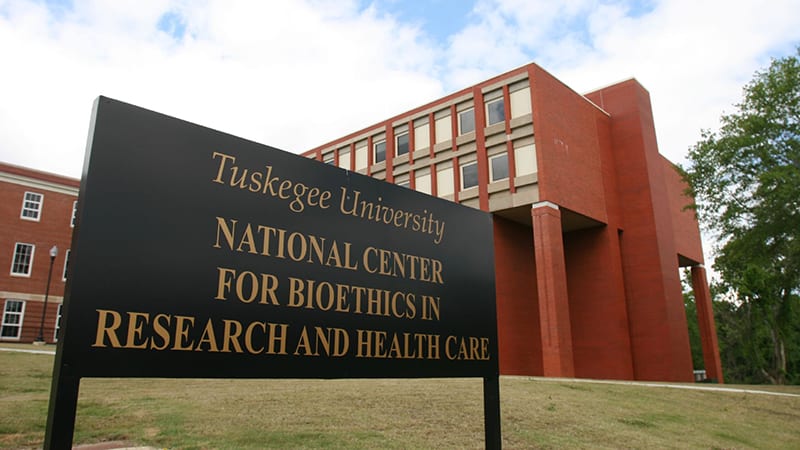
Several UNCF-member institutions are making strides in research, technology and community impact. Tuskegee University in Tuskegee, AL is leading efforts to address health disparities and is recognized for its work in bioethics and public health.
Leading Research in Health Disparities: Tuskegee University and Morehouse School of Medicine
Several UNCF-member institutions are leading efforts to address health disparities. Tuskegee University in Tuskegee, AL is recognized for its work in bioethics and public health including research aimed at improving health outcomes for underserved populations. Meanwhile, Morehouse School of Medicine in Atlanta, GA continues to produce culturally competent and highly skilled physicians while advancing research in areas such as cardiovascular disease and maternal health—both of which disproportionately impact Black communities.
Tech and STEM Innovation: Benedict College and Clark Atlanta University
UNCF-member institutions are also driving innovation in STEM education. Benedict College in Columbia, SC, has established a cutting-edge Cybersecurity Center to equip students with the skills needed to address global security challenges. Similarly, Clark Atlanta University in Atlanta, GA, leverages its data science and machine learning programs to provide students with hands-on experience in rapidly growing technology and analytics fields.
Sustainability and Environmental Justice: Florida Memorial University and Dillard University
Environmental sustainability is another area in which UNCF-member institutions are making significant contributions. Florida Memorial University in Miami, FL, has launched a Climate Resiliency Center to promote renewable energy solutions and educate students on environmental stewardship. The center addresses the disproportionate impact of climate change on Black communities, which face higher risks of displacement from extreme weather events and greater exposure to industrial pollution.
Similarly, Dillard University in New Orleans, LA integrates climate resilience into its curriculum through its Center for Sustainability, empowering students to tackle ecological challenges in urban and coastal areas. By addressing these environmental injustices, these institutions advance research while fostering solutions that benefit the communities most affected by climate change.
Supporting Student Success Through Innovation: Spelman College and Xavier University of Louisiana
UNCF-member colleges continue to prioritize student success through innovative programs. Spelman College in Atlanta, GA offers a Center for Innovation & the Arts, which promotes interdisciplinary collaboration and encourages students to explore the intersection of art, technology and entrepreneurship. Xavier University of Louisiana in New Orleans, LA, operates a renowned pre-med program that combines rigorous academics with mentorship and research opportunities, resulting in one of the nation’s highest medical school acceptance rates.
Embracing Digital Transformation: Livingstone College and Miles College
UNCF-member institutions are embracing digital transformation to enhance the student experience. Livingstone College in Salisbury, NC, recently introduced a state-of-the-art e-sports lab, blending academics with competitive gaming to attract and engage students. Similarly, Miles College in Fairfield, AL, is integrating virtual reality into its curriculum, providing students with immersive learning experiences that bridge theory and practice.
Innovation has always been at the heart of HBCUs—a reflection of resilience, creativity and an unwavering belief that education has the power to change lives. From cutting-edge research to impactful community programs, these institutions continue to break barriers and create opportunities for future leaders. Across UNCF’s 37 member institutions, innovation is not only transforming classrooms and research labs; it is driving economic mobility, advancing technology and strengthening communities nationwide. By investing in UNCF, you support these centers of progress and advance America’s collective future—one where the breakthroughs born on HBCU campuses help create a more equitable, prosperous and educated society for all.
INSPIRE
Children’s Book Author and STEM Nonprofit Founder Supported by UNCF Scholarship

Tori Jarrett is a junior at Spelman College, a UNCF-member institution, the founder of a STEM nonprofit that introduces young girls to science and engineering and a published children’s book author. She recently received the Gantt-McColl Scholarship from UNCF.
A Family of UNCF Scholars
The Gantt-McColl Scholarship is offered to high school seniors projected to graduate from eligible public high schools in Mecklenburg County, North Carolina with at least a 2.5 grade point average (GPA). The scholarship may be renewed for up to four years. “Getting the Gantt-McColl Scholarship took a lot of pressure off of me,” she said. “Being a private college, there’s not a lot of scholarships available. This was a lifeline for me. Now I get paid to go here and get a book voucher every semester to pay for my books, so it doesn’t have to come out of pocket.” “Being a UNCF scholar is in my family,” Jarrett explained. Her dad also received a UNCF scholarship, while he attended Johnson C. Smith University, also a UNCF-member institution. The scholarship from UNCF “was how he was able to pay for school, coming from a one-income household.” Jarrett’s uncle also attended an HBCU, Cheyney University of Pennsylvania. As a scholarship recipient, Jarrett was invited to attend this year’s Mayor’s Masked Ball in Charlotte. She recounts it as one of her favorite experiences being a Gantt-McColl scholar. “Being able to stand up there on that stage and express my gratitude was something I enjoyed,” she said. “Being able to show the impact of donating to UNCF and for them to hear those stories.”Journey to Spelman
Originally, Jarrett wasn’t interested in attending Spelman. “I didn’t want to go to Spelman at all, but my parents were like ‘just apply,’” she said. She attended Spelman’s scholar weekend in 2023 and remembers being disappointed that the school didn’t have an engineering program. “But our student speaker was a chemistry major, and she talked about her internship at Estée Lauder,” she shared. “After that, I thought ‘Spelman is my place, this is where I want to be.’” Now, she is entering her final year at Spelman and serves as the president of Spelman Sisters of STEM. She has interned with Stryker, which makes medical devices, and conducted undergraduate research at Louisiana State University (LSU). “I really loved it, but it taught me I don’t want to be in a lab for eight hours straight,” she said. “I love talking to people and being active in my community." While participating in research at LSU, Jarrett discovered that she enjoyed spending days with the project manager. “I’m a generalist, not a specialist,” she explained. “I don’t want to settle on one thing. He got to know marketing, sales, every aspect of the business. For me, I loved being in the lab, but [also] hearing different sides, being able to understand the story from the envisioning of the product.”Sharing Her Passion for STEM
In 2023, Jarrett founded Beauty & Brains, a nonprofit organization that introduces girls ages 7-12 to science and engineering. Through Beauty & Brains, she holds cosmetic chemistry workshops to foster the next generation of women in STEM. She estimates that she’s worked with 85 girls so far. She got the idea for the nonprofit while working on her senior impact project. She received a scholarship from the Young Black Leadership Alliance (YBLA) for teaching young girls how to make bath bombs, perfumes and other cosmetic chemistry. “That’s how it started, it was a project for a scholarship,” she said. “I won the scholarship, but it was something I didn’t want to stop doing. I was able to expand in Los Angeles when I had an internship there. Now I’m growing it throughout Charlotte, NC.”Introducing Kids to Recycling through Her Children’s Book
Jarrett is also a published children’s book author. Her book, "The Recycling Rhythm of Rosie and Ron," sparks conversations around environmental justice with young learners and helps to bridge the literacy divide. “Creative writing has always been a vessel for how I could express myself,” she shared. “If I couldn’t sleep at night as a child, I’d just write. My mom said ‘why don’t you publish something’, and I thought ‘I’ll try.’” Jarrett wrote the book during the winter break of her freshman year. She chose to write about recycling because “it’s something I’ve been doing my whole life,” she explained. “When my family moved, I didn’t want to throw the moving boxes away. I made a mansion out of cardboard boxes, decorated Christmas trees with cans.” She wanted to inspire children to get creative with cardboard boxes, plastics and other recyclable materials. “Children haven’t had that inspiration,” she said. “They’re not reading as much, reading doesn’t seem fun anymore. I love [Dr. Seuss'] "The Lorax", I wanted to put that love back into reading.” Jarrett found a publisher who believed in her and her story. In February, she had her first book signing 30 minutes away from Spelman. “It was held in partnership with the National Pan-Hellenic Council, and they all came out,” she said. “I was able to sell out of all the books I brought—I didn’t even think I’d sell 10. People are joining Read Across America and reading my book through that.” Her book sold out of the first printing, so get your copy today.A Multitalented Young Professional
Jarrett also won the National American Miss North Carolina title in June, according to an article in The Charlotte Post. Next, she will represent the state at the National American Miss national competition in Orlando, FL, in November. She is an aspiring research and development scientist interested in finding a position in chemical engineering after graduation. “There’s nothing more rewarding for me than taking on different challenges to try and solve problems, especially the medical device industry,” Jarrett shared. “Personally, I love the business side of engineering. I want to lean more into the product management side.”INSPIRE
UNCF Student Leadership Conference: Donor Support Enables Students to Lead and Succeed
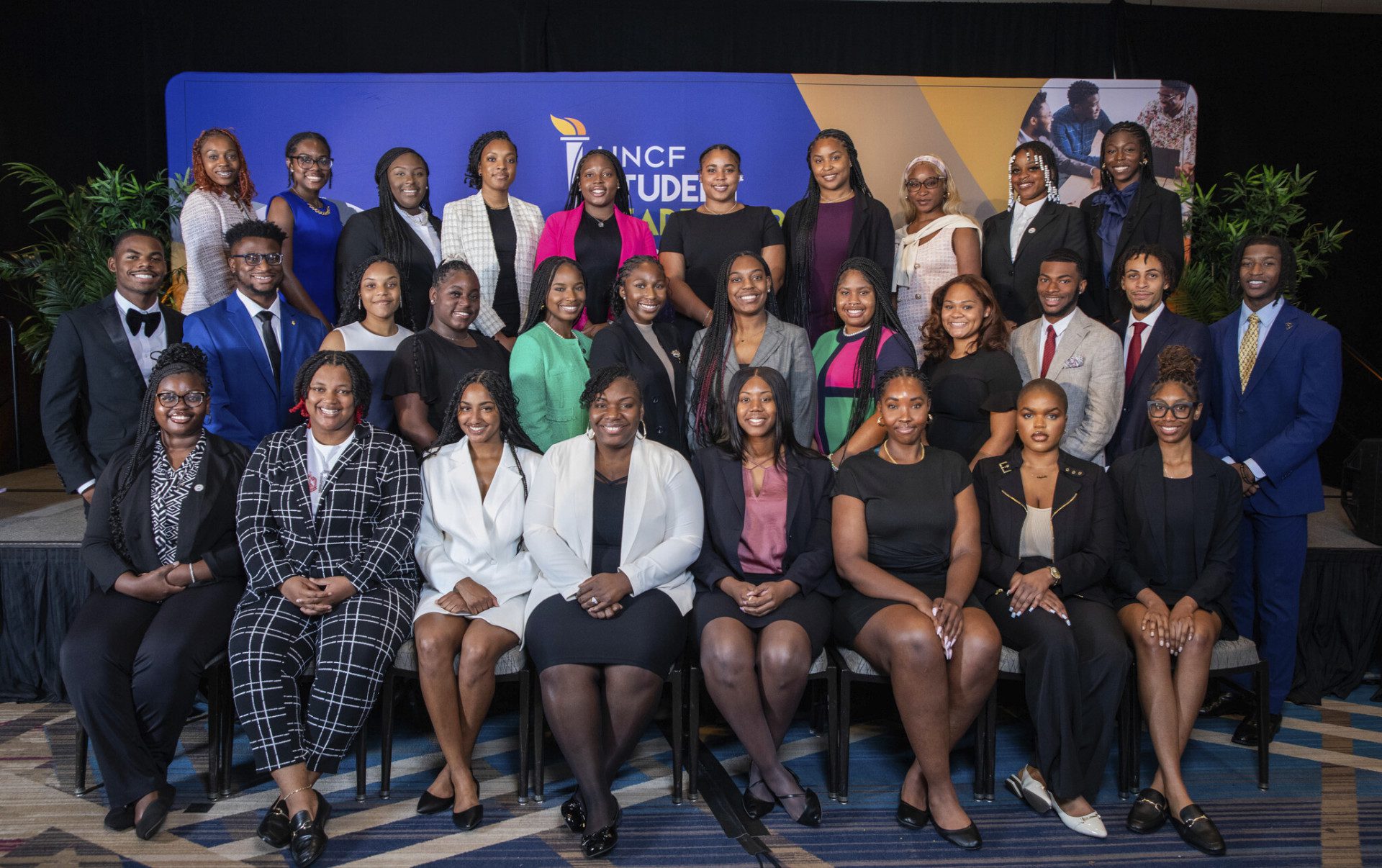
The UNCF Student Leadership Conference is an immersive, high-impact professional development experience designed to prepare students for success in the workplace. Rising juniors, seniors and entry-level hires from colleges and universities nationwide, including HBCUs, gained the skills, confidence and career readiness needed to excel in their summer internships and early careers through intensive simulations and coaching from senior business and nonprofit leaders.
Through the support of sponsors who integrate internships into their scholarship programs, students are gaining hands-on experience that bridges the gap between classroom learning and career readiness.
“Wells Fargo is excited to be involved again with the UNCF Student Leadership Conference,” said Shantae Joseph, head of employee engagement and strategic enablement, Wells Fargo. “Our leaders believe in investing in the lives of talented students with our time, talent and treasure, and we look forward to positively impacting each one of them during this great conference.”
The conference featured dynamic workshops, keynote addresses and coaching sessions led by top executives from corporate and nonprofit sectors. Students honed essential workplace skills—communication, teamwork, leadership and professionalism—while building confidence as emerging leaders in industries such as business, computer science, education, engineering, finance, healthcare and technology.
“Recent data confirms that more than half of undergraduate students in the United States are considered first-generation college students—and that number rises to 70% at HBCUs,” said Taliah Givens, senior director, student professional development programs, UNCF. “That means many of these students are also the first in their families to transition into careers requiring a college degree. It’s our priority, alongside our corporate partners, to provide SLC as a launching pad—equipping talented, underrepresented students with real tools for transformational internships that lead to full-time positions.”
Each year, donor contributions for the student leadership program supports students in being able to attend, network with peers and leaders, connect with impactful internships and receive mentorship. The SLC ensures they not only earn degrees, but also enter the workforce prepared to lead with purpose and professionalism.
Together, through investment in experiences like SLC, UNCF and its supporters are creating a future where opportunity is accessible to all. Because when donors open doors for students, they open doors to better futures for us all.
INNOVATE
A Banner Year for Livingstone College


INSPIRE
Rising from the Ashes: UNCF's Lifeline Amidst the LA Wildfires
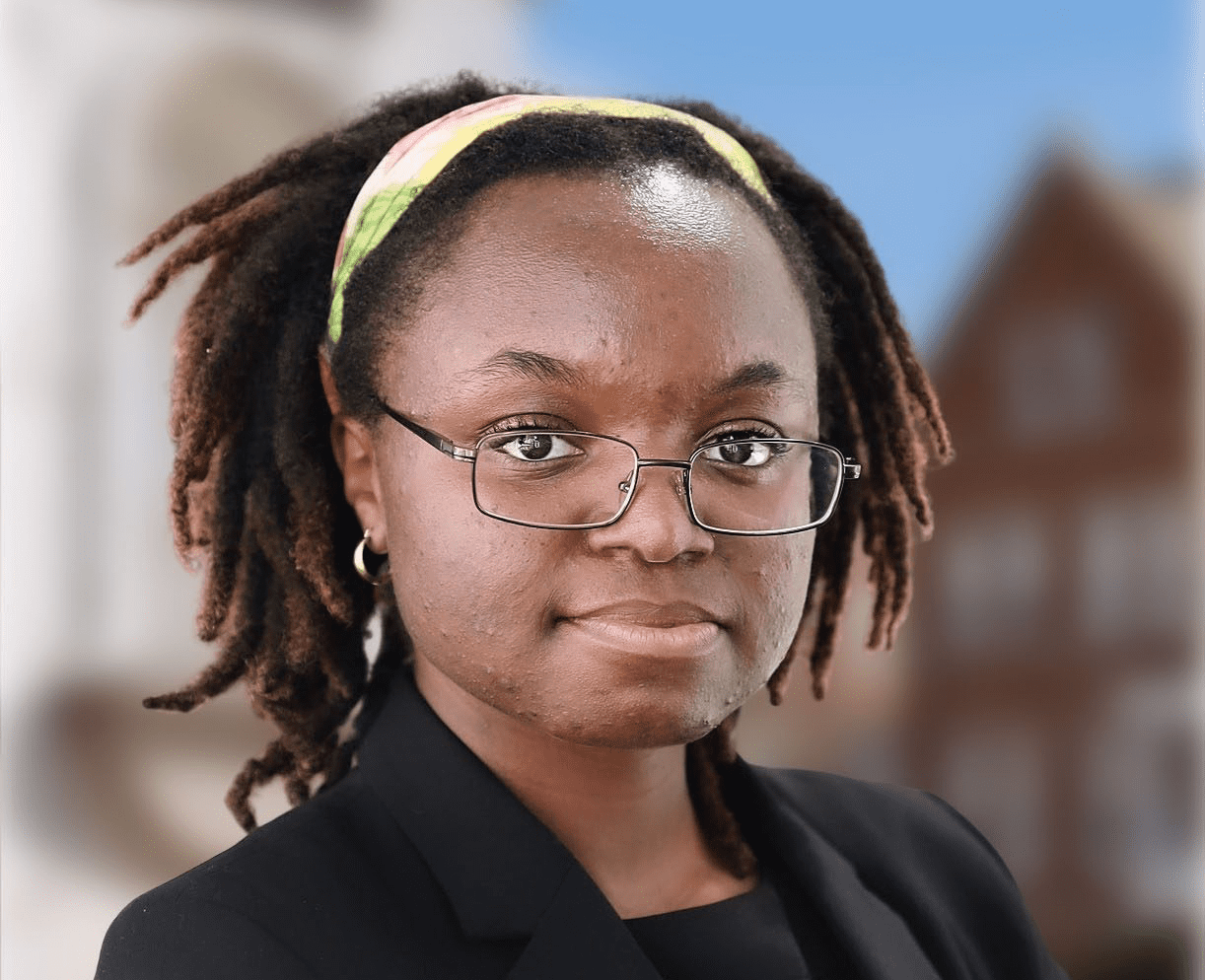
Loie White, a junior majoring in computer science at UNCF-member institution Spelman College.
The wildfires, fueled by extreme heat and dry conditions, swept through neighborhoods, forcing thousands to evacuate. Schools were closed, and many students lost their homes, creating a ripple effect that jeopardized their educational pursuits. Reports indicated that over 15,000 students in the affected areas were at risk of losing their academic year due to displacement and trauma.
Recognizing the urgent need for support, UNCF launched the UNCF Los Angeles Area Wildfire Relief Fund through three specific programs, offering emergency scholarships that were critical financial assistance to eligible students and alumni.
The relief fund was available to undergraduate and graduate students attending HBCUs; the children of HBCU alumni who suffered losses due to the wildfires; and students attending any accredited, four-year college or university whose families have been directly impacted by the wildfires.
“UNCF’s Los Angeles Area Wildfire Relief Fund was more than just financial assistance; it was a lifeline for students and families striving to reclaim their dreams after the devastation of the LA wildfires,” said Dr. Veda Ramsay Stamps, regional development director, Los Angeles, UNCF. “In the face of adversity, the spirit of community shines brightest. Our fund helped us to restore hope and opportunity for those students and families affected by the wildfires.”
Among the beneficiaries of the emergency relief fund was Jerimee Demetrius Moore, a junior majoring in child psychology at UNCF-member Stillman College. The fires destroyed his family’s home forcing Jerimee and his family to evacuate to his grandmother’s home.
“We were devastated. But me being a prayer warrior, I returned to school hoping for the best,” Jerimee recalled. “Home wasn’t an option because I didn’t have a home anymore. So God opened the door for Stillman College. God put me in touch with UNCF. When I arrived at Stillman, I didn’t have to pay anything. Scholarships covered everything. I’m grateful for all [UNCF has] done because without you, my future would have been in jeopardy. Thanks to UNCF, it isn’t.”
Similar stories emerged as emergency funding reached students across the region.
Loie White, a junior majoring in computer science at UNCF-member Spelman College, recalled when the fires struck, her family was forced to relocate from their home because of the toxicity in the soil caused by the fires. With the support of UNCF, Loie received funds enabling her to focus on her studies.
"I was happy to receive financial support from UNCF. It’s nice to know that someone is looking out for you,” she said.
Ethan Allen, Jr., a sophomore at the University of California Berkeley, planning to major in forestry, expressed gratitude to UNCF for the support, which allowed him to focus on his studies and appreciate his school more. Ethan and his family evacuated their home which was destroyed. UNCF provided Ethan with financial assistance, which alleviated some of the family’s stress. He was alerted by a cousin that UNCF was willing to help. “I was excited to say the least,” he said after learning he would be receiving help from UNCF. “It’s really helped to elevate my parents’ stress. I am eternally grateful to UNCF.”
Logan Weaver, a sophomore majoring in financial planning at Arizona State University (ASU), learned about UNCF’s emergency funding assistance program from his mother. Despite losing everything, he resumed his freshman year at ASU and continued pursuing his interest in artificial intelligence and business. Logan expressed his gratitude for the assistance he received from UNCF. “What you guys are doing is incredible. The help UNCF provided is awesome.”
The 2025 LA wildfires served as a stark reminder of the unpredictability of nature and the resilience of the human spirit. Through its emergency funding and comprehensive support, UNCF played a pivotal role in helping students navigate one of the most challenging times in their lives. As they move forward, the stories of resilience and hope continue to inspire a renewed commitment to education and empowerment for all, ensuring that the lessons learned from this crisis will foster a better future for generations to come.
INSPIRE
Better Futures for Target Scholars: How the Program Changes Student Lives
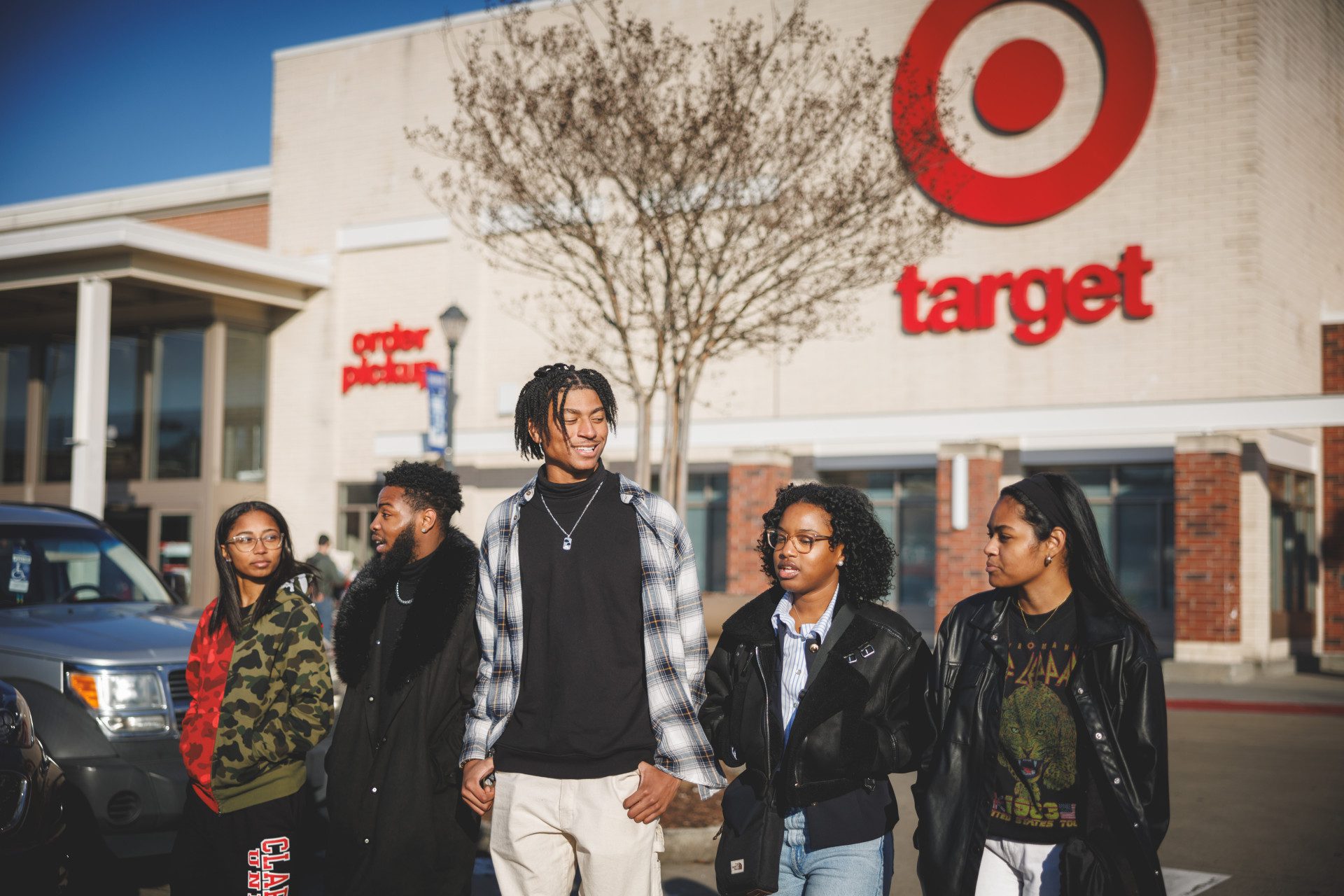
“Prior to being recognized as a Target Scholar, I began to feel very overwhelmed and unconfident in my college education,” said Princess Dandoo of Spelman College in Atlanta, GA. “The Target Scholars Program gave me a glimpse of hope and something to look forward to. I’ve been blessed with a community of understanding Black men and women who share similarly big dreams.”
The program’s financial relief and sense of belonging motivate scholars facing challenges. Gideon Boadu, a student at Howard University in Washington, DC, said, “Just knowing that there are people who want to see you succeed and are constantly making an effort to prove that keeps me going in college. When I want to give up, I realize it’s not just me—the Target team is rooting for me. So, I keep moving.”
For Darrian Belcher, attending North Carolina A&T State University, the financial support has been life changing. “I truly appreciate the funding that the Target Scholars Program provided to help me achieve my dream of higher education. Being a Target Scholar lifted an enormous financial burden from my family and gave me a community of peers to learn and grow with,” he said.
To’nyia Richardson, also attending Howard University, highlighted the emotional support the program provides. “Being a part of the Target Scholars Program has impacted my college experience so much—financially by lifting some of the weight off my parents’ shoulders and mentally by giving me something to push and work for. I love the bonds I have made from it,” she said.
A Network of Support and Inspiration
Deja Parks, attending North Carolina A&T State University, emphasized the significance of mentorship and how it made an enormous difference in her success. “My mentor was incredible—she’s been there every step of the way. She’s walked the path I want to take and is helping me navigate it with confidence.”
The experiences of these Target Scholars underscore the life-changing impact the program has had. More than financial assistance, the program provides a comprehensive support system that prepares students for success in college and beyond. Mentorship is vital as students transition from college to careers, equipping them with tools and insights for professional success.
Nasir Barnes, a student at UNCF-member institution Morehouse College, explains his success and path to achievement thanks to the Target Scholars Program and UNCF.
Learn about how the Target Scholars Program has made a real difference for students of color attending HBCUs since the program’s inception in 2021.
Meaningful Impact
The Target Scholars Program exemplifies how corporate partnerships can drive meaningful change. Target’s investment in HBCU students through UNCF not only eases financial burdens, but also builds a foundation of mentorship, community and opportunity. These scholars are thriving—and their success stories are a testament to what’s possible when corporations and other private entities invest in education. As we look ahead, the continued support of donors and partners like Target will be essential in expanding this impact. Together, we can reach more students, strengthen our communities and shape a more inclusive tomorrow.
INVEST
$600M from Bloomberg Philanthropies Supports Four Historically Black Medical Schools to Train Next Generation of Doctors
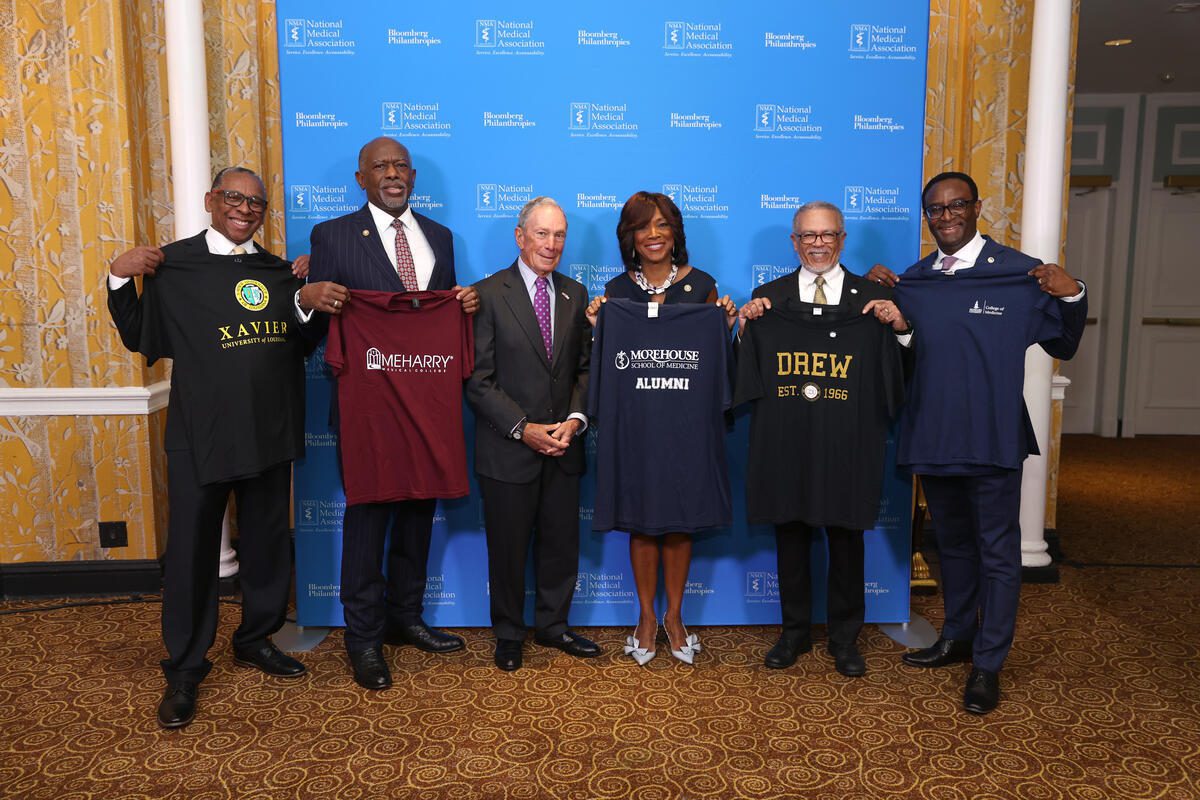
Bloomberg Philanthropies announces the largest-ever gift to the nation’s four historically Black medical schools in New York, Aug. 6, 2024. (L to R) Dr. Reynold Verret, president, Xavier University of Louisiana; Dr. James E.K. Hildreth, president and CEO, Meharry Medical College; Michael R. Bloomberg, founder, Bloomberg LP and Bloomberg Philanthropies; Dr. Valerie Montgomery Rice, president and CEO, Morehouse School of Medicine; Dr. David M. Carlisle, president and CEO, Charles R. Drew University of Medicine and Science; Ben Vinson III, Ph.D., former president, Howard University.
Howard University College of Medicine, Meharry Medical College and Morehouse School of Medicine (Morehouse College is a UNCF-member institution) each received $175 million, and Charles R. Drew University of Medicine & Science received $75 million. The new funding more than doubled three of the four medical schools’ endowments. Funding levels were determined by current class size and anticipated growth.
How this Gift Benefits Historically Black Medical Schools
The support in HBCU funding aims to bolster the schools’ endowments and strengthen their institutional capacity to respond to the rising costs of tuition and operations. The medical schools face underfunded endowments due to systemic funding inequities, such as lower federal and state support. This investment builds on Bloomberg Philanthropies’ initial 2020 gift of $100 million to the four medical schools.
Bloomberg Philanthropies also provided $5 million in seed funding to support the creation of Xavier Ochsner College of Medicine, a new medical school founded by UNCF-member institution Xavier University of Louisiana and Ochsner Health System, a not-for-profit health system based in New Orleans, LA.
“As the only HBCU medical school in the Gulf South, Xavier Ochsner College of Medicine will train physicians who reflect the diversity of the communities they serve and help address a critical healthcare shortage in the region,” said Dr. Reynold Verret, president, Xavier University of Louisiana. “We are profoundly grateful to Mike Bloomberg and Bloomberg Philanthropies’ Greenwood Initiative for their bold vision and tremendous support which will accelerate our mission to create a healthier, more equitable, more just future for the Gulf South and for the nation.”
Building Institutional Strength for Lasting Impact
The investment from Bloomberg Philanthropies, a philanthropic organization that encompasses all of the charitable giving of Michael R. Bloomberg, is part of its Greenwood Initiative—an effort with a proven track record of supporting partners and institutions to help increase economic and social mobility across the United States.
“Bloomberg Philanthropies’ Greenwood Initiative investment will build the institutional wealth of the historically Black medical schools, boosting their ability to provide the best training possible for current and future students,” said Garnesha Ezediaro, who leads Bloomberg Philanthropies’ Greenwood Initiative. “Ultimately, the benefits of the gift will be realized in the communities where these doctors practice and the patients they serve.”
This historic investment from Bloomberg Philanthropies demonstrates how targeted support for HBCUs strengthens institutions that train the next generation of Black medical professionals. By helping medical schools expand their capacity, secure financial sustainability and educate more physicians, donors fuel not only individual student success but also the health and well-being of communities nationwide. Investments like this create better futures for all Americans, ensuring that access to quality healthcare reflects the diversity and needs of the United States.
INVEST
UNCF Raises $2 Million Through Walk for Education in 19 Cities to Support HBCUs and Students

University of Louisiana students race to the finish line at UNCF’s Walk for Education in New Orleans, LA.
These events are more than fundraisers—they are a statement of community and commitment. From Milwaukee to Detroit to New York, participants rallied at the local level, amplifying national momentum and raising essential support for UNCF-member historically Black colleges and universities (HBCUs) and their students.
“UNCF is 80 years young, and we’re more committed than ever to pave the path forward for underrepresented students to fulfill their dream of attending college and achieving career success,” said Maurice E. Jenkins Jr., executive vice president and chief development officer, UNCF. “We’re asking corporations, foundations, HBCU alumni and individual supporters to join UNCF in raising these critical funds through our Walk for Education series—and have fun doing good!”
Proceeds from the Walk for Education directly support UNCF’s core mission of enabling student success, strengthening its member institutions, fostering awareness of the need for donations to UNCF, and demonstrating the impact of private financial support, both large and small.
For FY25, the national UNCF Walk for Education® sponsor was Colgate-Palmolive, a caring, innovative growth company that is reimaging a healthier future for all. The company, which has supported UNCF since its founding in 1944, also proudly participated in the event. At the local level, the South Texas UNCF Walk for Education in Houston, TX, event drew considerable corporate backing. Sponsors included the Boeing Company, ExxonMobil, Southwest Airlines, Wellby Financial, Wells Fargo, Whataburger and many others.
Additionally, General Motors, a legacy supporter of UNCF for 80 years, fielded its largest corporate fundraising team in the Detroit UNCF Walk’s history. Celebrating its 36th year, the Detroit UNCF Walk for Education exceeded its $600,000 fundraising goal thanks to support from Ph.D. Sponsor: Ford Motor Company; Master’s Sponsors: AAA-The Auto Club Group, Delta Air Lines and Emagine Entertainment; Bachelor’s Sponsors: AAA Life Insurance, Comerica Bank and Henkel Corporation along with our other sponsors, nearly 500 walkers and more than 80 volunteers.
These local outcomes illustrate how a $2 million fundraising goal is built city by city and dollar by dollar—and how strong regional turnout and corporate engagement can elevate the campaign’s impact.
Every dollar raised through the Walk for Education is an investment in potential—an investment in students, institutions and community progress. As philanthropic dollars big and small flow into UNCF’s mission, they help unlock scholarships, programming and capacity-building at HBCUs, enabling more students to get to and through college. Stronger HBCUs produce more graduates who contribute innovation, leadership and economic vitality across all sectors of American life. In short, investing in UNCF is investing in America’s future—ensuring broader access, opportunity and lasting impact for all of us.
INVEST
UNCF-Style March Madness Raises $13.6M for HBCUs and their Students
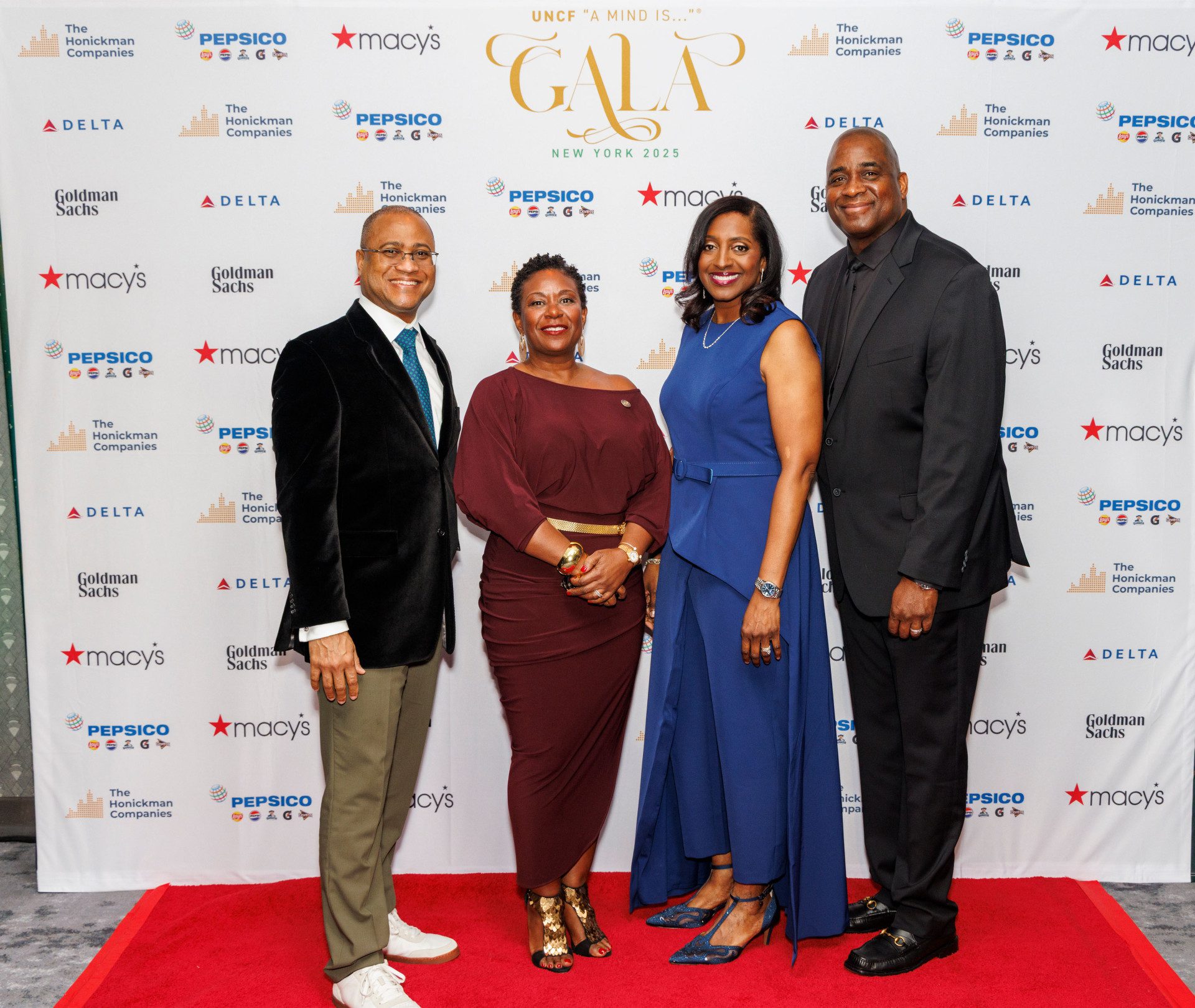
Adrian Mitchell, chief operating officer and chief financial officer of Macy’s, Inc., accepted the Corporate Partner Award; Nicole Pullen Ross of Goldman Sachs received the Shirley Chisholm Award; and Angela and Reginald Goins, founders of the Reginald & Angela Goins Charity Fund, received the Leadership Award.
With resolute dedication to expanding educational opportunities for underrepresented students, UNCF has achieved remarkable results over its eight decades. March 2025 proved to be an extraordinary month, with unprecedented engagement from donors, partners and the broader community.
Funds raised during this period help ensure that HBCUs continue providing a transformative education, nurturing generations of leaders who contribute meaningfully to society. By supporting UNCF-member institutions, donors help strengthen programs, enhance campus resources and empower students to reach their college and career goals.
“We are incredibly grateful for the outpouring of support we received from donors and corporate partners during our busiest fundraising season,” said Dr. Michael L. Lomax, president and CEO, UNCF. “It is especially gratifying that this phenomenal achievement coincides with UNCF’s 80th anniversary. We remain steadfast in our commitment to empower our member institutions and all HBCUs as they prepare future generations to achieve their college dreams and career success.”
UNCF’s March Madness-style fundraising efforts are more than spirited competition—they are a powerful demonstration of how donor investment fuels opportunity. Every contribution helps provide scholarships, academic support and transformative experiences that shape students’ futures. By participating, donors are not only empowering individual HBCU students but also investing in better futures for all Americans, ensuring the next generation of leaders, professionals and innovators has the tools to thrive.
INVEST
Miles College Awarded Home Depot Innovation Lounge Grant

Miles College used the donations it received to successfully transform a space on campus into a dynamic hub for creativity, collaboration and entrepreneurship. The Innovation Lounge features modular furniture, collaborative zones and flexible learning areas designed to support the diverse ways students engage, learn and build community. (Photo Credit: Ta’Ron Williams)
“We are thrilled to partner with The Home Depot to bring this vision to life,” said Dr. Bobbie Knight, president, Miles College. “This Innovation Lounge will not only enhance our campus infrastructure but also provide our students with the resources and environment necessary to thrive in an ever-evolving professional landscape.”
The Innovation Lounge features modular furniture, collaborative zones and personal pods to accommodate a variety of learning styles and activities. It serves as a knowledge hub, offering workshops, guest lectures and networking events that connect students with industry professionals and alumni.
“The space also supports research initiatives and partnerships with industries and nonprofits, providing students with hands-on experience in solving real-world problems,” said Dr. Erskine “Chuck” Faush, chief innovation and growth officer and vice president of institutional advancement at Miles College.
Dr. Tonya Perry, provost and senior vice president of academic affairs at Miles College, emphasized the importance of diverse learning environments on campus. “All students learn differently—some thrive in quiet, focused pods, while others flourish in collaborative, open settings,” she said. “This Innovation Lounge gives our students the freedom to choose how they engage with their work. We’re grateful to The Home Depot for understanding that a one-size-fits-all model doesn’t serve today’s learners. With this grant, we can create something that works for all.”
Knight, Perry and Faush attended The Home Depot’s awards ceremony in Atlanta, GA, at Mercedes-Benz Stadium. President Knight proudly represented Miles College and accepted the award on behalf of the institution, joined by members of her leadership team. The event welcomed leadership from numerous HBCUs across the country who were also recognized as grant recipients, further emphasizing the nationwide impact of The Home Depot’s investment in excellence.
“As this vision moves forward, Miles College is grateful for the support of its institutional partners,” Knight added.
Investments like The Home Depot’s Innovation Lounge Grant extend far beyond campus improvements—they are catalysts for progress that uplift entire communities. When partners invest in UNCF-member institutions like Miles College, they help expand educational opportunity, strengthen local economies and cultivate future leaders who will drive innovation across Alabama and the nation. Each partnership ensures that historically Black colleges and universities (HBCUs) remain vital engines of talent and creativity, building a stronger, more inclusive America—one where every student can succeed and shape a better future for us all.
INVEST
Tennis Champion Coco Gauff Gifts UNCF $100,000 to Create Scholarship for HBCU Students Playing Competitive Tennis

In partnership with UNCF, the Coco Gauff Tennis Scholarship was created for student-athletes competing on intercollegiate tennis teams at historically Black colleges and universities (HBCUs). The scholarship awards up to $8,500 in need-based aid to help cover rising tuition costs. (Photo Credit: Wang He / Stringer)
“We are incredibly grateful to Coco Gauff for her generous $100,000 gift to UNCF, which will significantly impact the lives of HBCU students aspiring to excel in competitive tennis,” said Maurice E. Jenkins, Jr., executive vice president and chief development officer, UNCF. “Her commitment not only showcases her dedication to education and athletics but also inspires the next generation of student-athletes to pursue their dreams. This gift reinforces the importance of supporting our young leaders and ensuring they have the resources necessary to succeed both on and off the court.”
At 20, Gauff is one of UNCF’s youngest major gift donors. She supports HBCUs because she recognizes their value and the role they play in communities. Several members of Gauff’s family have attended or currently attend HBCUs.
“My family has a deep-rooted history with HBCUs, going all the way back to my great, great grandfather,” Gauff shared. “From aunts and uncles to cousins, HBCUs have played a huge role in shaping who we are. Supporting UNCF in creating opportunities for student-athletes in tennis means a lot to me. As a young Black athlete, I understand how impactful it is to see people who look like me thriving in both sports and education. I want to help the next generation of student-athletes continue pursuing their passion for tennis while reaching their academic goals. My hope is that this scholarship gives more young Black players the confidence to chase their dreams, knowing they have a strong community behind them and a bright future ahead.”
In recognition of Gauff’s 2023 U.S. Open victory, the United States Tennis Association committed $3 million to refurbishing tennis courts across the country. North Carolina Central University, a public HBCU in Durham, NC, was also granted $21,000 as a part of this initiative.
Gauff has won nine Women’s Tennis Association (WTA)-tour level singles titles including the 2023 U.S. Open and the 2024 WTA Finals. She has also won nine doubles titles including the 2024 French Open.
Coco Gauff’s generous gift demonstrates how individual donors can create meaningful opportunities for HBCU students to excel academically and athletically. By supporting scholarships for student-athletes who are competitive tennis players, Gauff helps remove barriers and build confidence among future student-athletes. Her investment and financial example not only strengthen HBCU programs, but also contributes to a future in which all young people—regardless of background—have the resources and encouragement to achieve their potential. A perfect ace, ensuring better futures for all Americans.